
Understanding Cambodia’s tragic history is not dark tourism. It is part of responsible travel Cambodia, travelling with respect, compassion, and acknowledging the weight of the past while supporting the country’s continued healing.
On the bus ride from Thailand to Siem Reap, Cambodia, another backpacker was blasting the song Cambodia by Kim Wilde, joking that it was Cambodia’s national anthem. Undeniably it is a catchy tune, though what I did not know at the time, and what a lot of listeners probably gloss over, is that the song’s happy melody covers solemn lyrics. The lyrics refer to the dark history of Cambodia when US bomber pilots were called on a secret mission to bomb neutral Cambodia, which occurred during the Vietnam War.
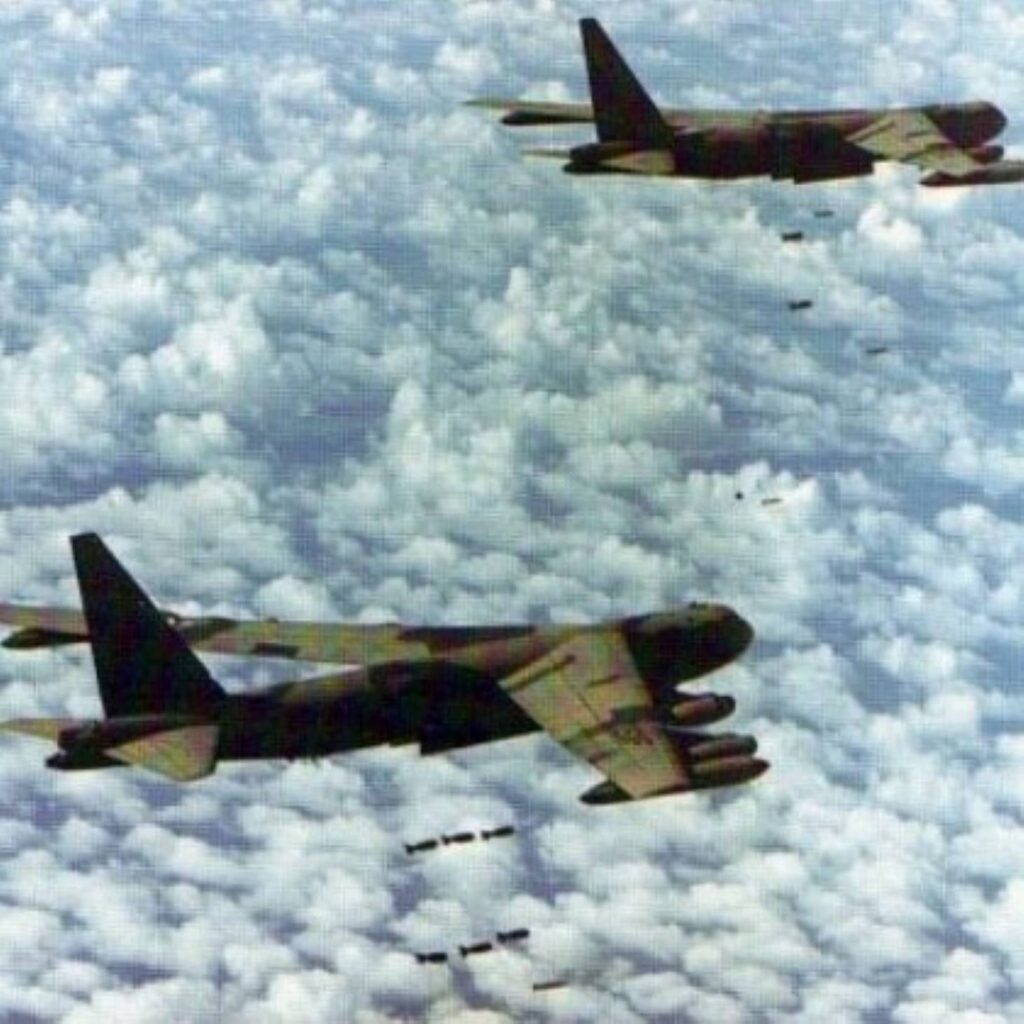
Even as a history graduate, I was not clued up on the sheer brutality that followed: the rise of the Khmer Rouge. To truly know this dark history of Cambodia, you have to spend time in Phnom Penh at the historical sites, understanding the legacy of a brutal regime that killed almost one-quarter of the population in a four-year period between 1975 and 1979. As many as 1.7 million Cambodians were murdered. This is not fun travel, but a vital act of reflection and responsible travel in Cambodia. This is beyond the guidebook territory. This is learning about the country you visit.
Table of Contents
The Khmer Rouge: Understanding The Historical Context Behind Responsible Travel in Cambodia
Pol Pot wanted a utopian agrarian society by all means necessary. The day the Khmer Rouge seized power on 17th April 1975, year zero was declared, signalling the beginning of a new society. The first step was to remove all traces of capitalism; all hospitals, schools, and businesses were abolished.
Immediately, all city residents were herded to the countryside, forced to work under brutal oppression, or faced summary execution. Society was about to be purified, as the Khmer Rouge believed they were engaged in a class struggle. Anybody who did not fit the new communist model was to be removed. Including any person who was educated (doctors, engineers, and business owners), could read, was able to speak a foreign language, had money, or even wore glasses, was to be disposed of.
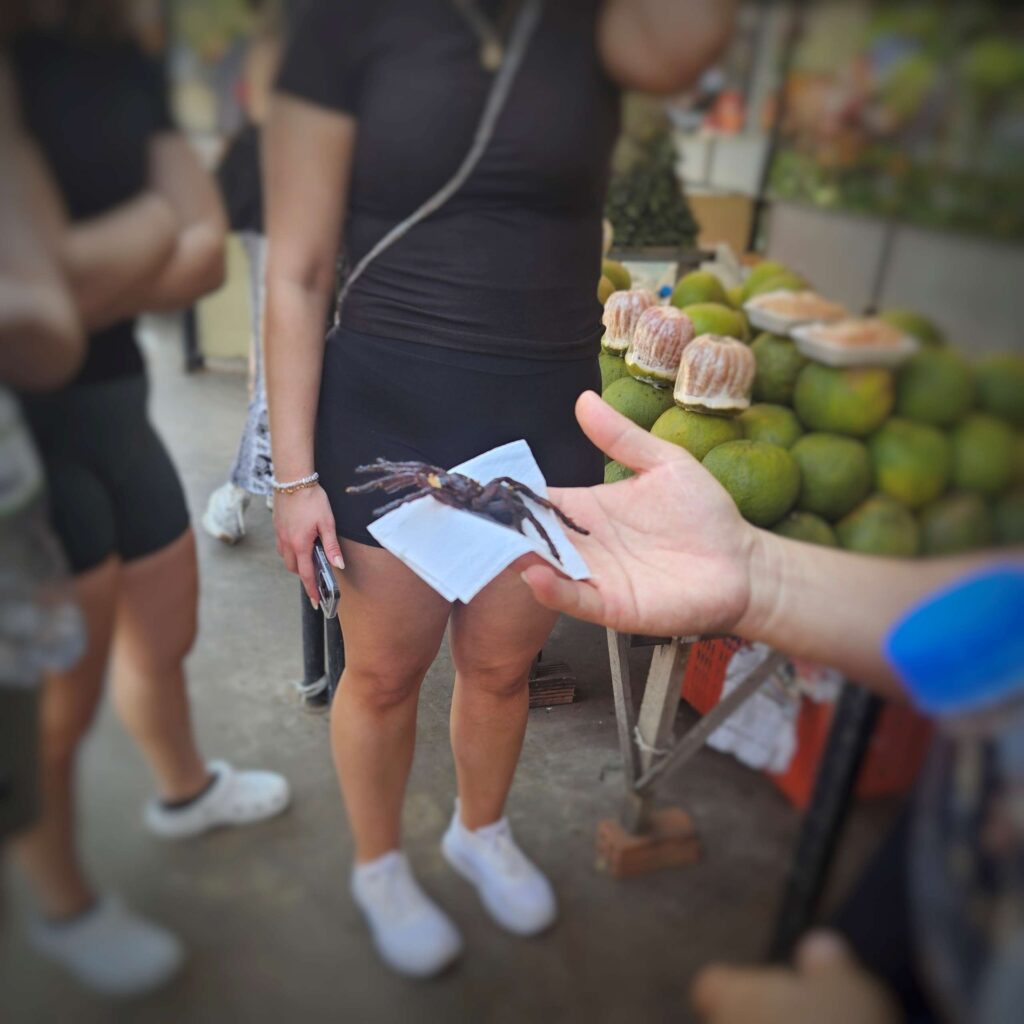
A detrimental result of this misguided policy was famine and food shortage. Those brought to farms from the city had no experience in agriculture. Soon crops died and harvests failed. What little food remained was to be taken by the Khmer Rouge towards their quota for rice production. One thing to note is that the Cambodians are hardy, resilient people. To overcome the food shortages, they turned to eating whatever they could get their hands on, including insects.
So when you see a tarantula for sale on a market stall, know that they do not sell this food for show. Understanding this is a crucial step toward responsible travel in Cambodia. Under oppression, insects became a staple part of the Cambodian diet, which remains today. A vendor selling scorpions told me that if you did not meet the rice quota, people from your village would be taken for ‘re-education’, so to save their family, his parents would not eat rice.
During my visit to Angkor Wat Temple, our guide, Mr. Sok, was my first real insight into life under the Khmer Rouge. He was born in the countryside outside of Siem Reap during the reign of terror under the Khmer Rouge. This is when I learned that Cambodians do not celebrate birthdays, mainly because record keeping was not common, with the very little existing records destroyed during the Khmer Rouge regime. Instead, Mr. Sok celebrates his birthday in April during the new year, along with many other Cambodians. Not having an exact birthday proved a headache when he tried to obtain a passport, needing to meet with many officials to prove identity.
Though I don’t remember how we came onto the conversation of the Khmer Rouge, this was more fascinating than the stories of the temples. Mr. Sok was a living example of history; he had lived through what others can only imagine. Every time I saw a Cambodian older than 50, I wondered what they had lived through. I was soon to find out that these could be considered the more fortunate ones.
Responsible Travel Cambodia: Visiting Tuol Sleng Genocide Museum (S21 Prison)
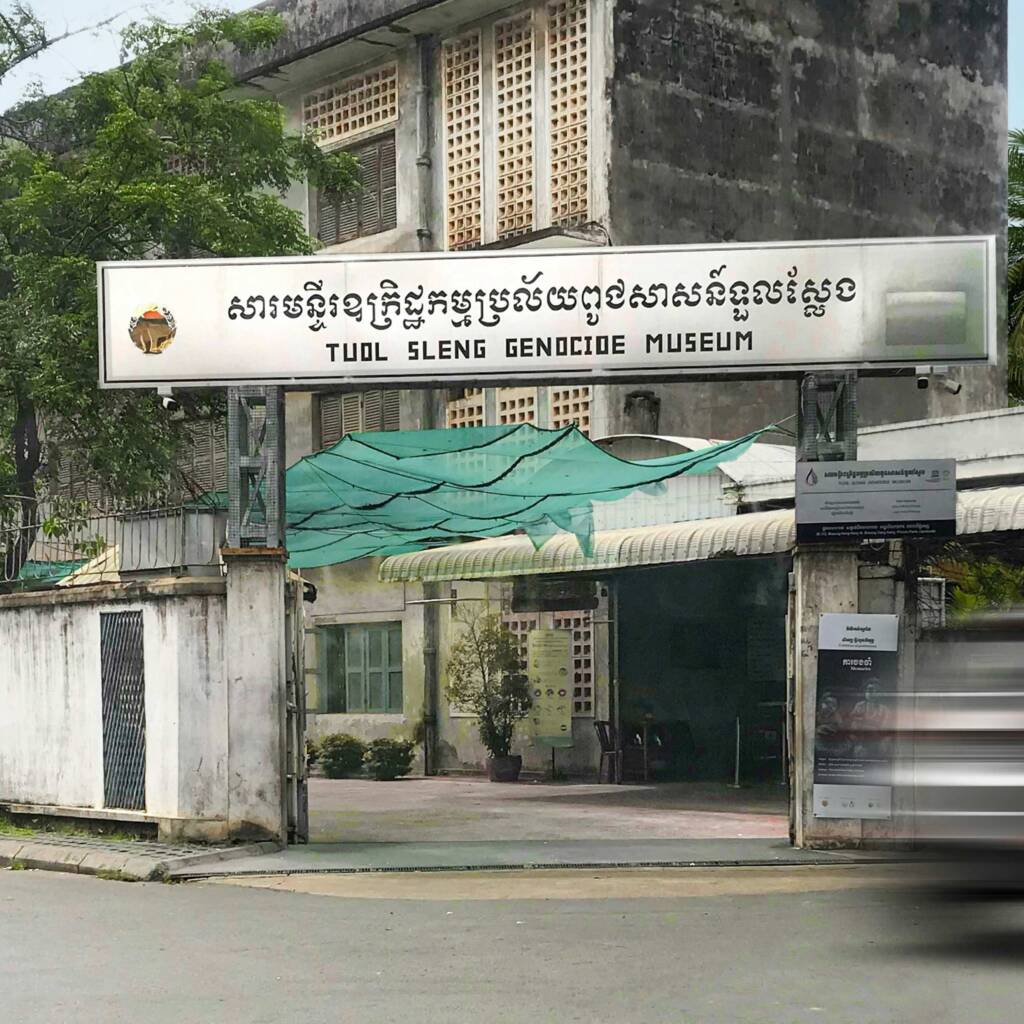
For the less fortunate people who didn’t fit the new communist model, including teachers, doctors, and the families of former officials, a far more calculated fate awaited them. These people were sent for ‘re-education’ at one of the regime’s security facilities, the most notorious of which was located right in the heart of Phnom Penh, a place known simply as S21.
Surprisingly, S21 was not purpose-built, but converted from a school. This building has lost the vibrant atmosphere associated with a school and instead has an eerie quiet and unnerving feeling of doom. Classrooms became cells, and the gyms and dining room housed torture chambers. An estimated 17,000 people were tortured there. Only 12 people made it out alive. The innocent victims, subject to repeated torture, were forced into signing false confessions.
Most of the torturers were peasant teenagers who had been dragged from the remote countryside, easily indoctrinated, and manipulated to carry out the orders of Pol Pot. Officials were equally as likely to become victims of the regime under which nobody was safe, especially during the collapse of the regime when the leaders had their own soldiers killed for fear of treason or reprisals.
As you move through the building, you come to a room covered with pictures of victims. Those deemed enemies of the regime were photographed and numbered before meeting their fate. The sheer number of faces, both young and old, defiant and scared, makes the cruelty feel unbearably real. These are the last photographs taken of these victims. These photographs are how many people learned about the disappearance of a loved one after the regime fell.
You may be fortunate during your visit by seeing one of the remaining survivors who have a stall outside selling their books. I didn’t see them when I visited, though I heard that they are often there.
Backpacker Quick Guide: Tuol Sleng Logisitcs
How do I get to Tuol Sleng S21? The prison is in the heart of Phnom Penh. The easiest and cheapest way is via a Tuk-Tuk or ride-share app like Grab/PassApp. Expect to pay $2–$4 USD from the riverside area.
What are the opening times for S21? The museum is generally open daily from 8:00 AM to 5:00 PM. Last entry is typically around 4:30 PM.
What is the entry price? The total cost is $10 USD: $5 for entry and a mandatory $5 for the excellent Audio Guide.
Why is the audio guide mandatory? It is vital for understanding the context and exhibits, fulfilling the essential for responsible tourism in Cambodia.
How long should I allow for my visit? Allow 2 to 3 hours minimum. The audio tour is extensive, and rushing will undermine the experience.
Is photography allowed inside S21? Photos are generally allowed in the courtyards and exterior areas, but are banned in certain sensitive exhibit rooms. Consider putting the camera away entirely to show upmost respect as this is a foundation of ethical tourism.
Choeung Ek Genocide Centre—‘The Killing Field’: A Guide to Responsible Tourism
After visiting S21, I continued on to Choueng Ek Genocide Centre, as this felt like the right order. For the estimated 17,000 victims who were tortured at S21, the confessions were always the first step. Once the false signatures were secured, the victims were transported just outside the city for the last step—execution. This was the dark end point for thousands of Cambodians: The Choeung Ek Genocidal Center, or ‘The Killing Field.’.
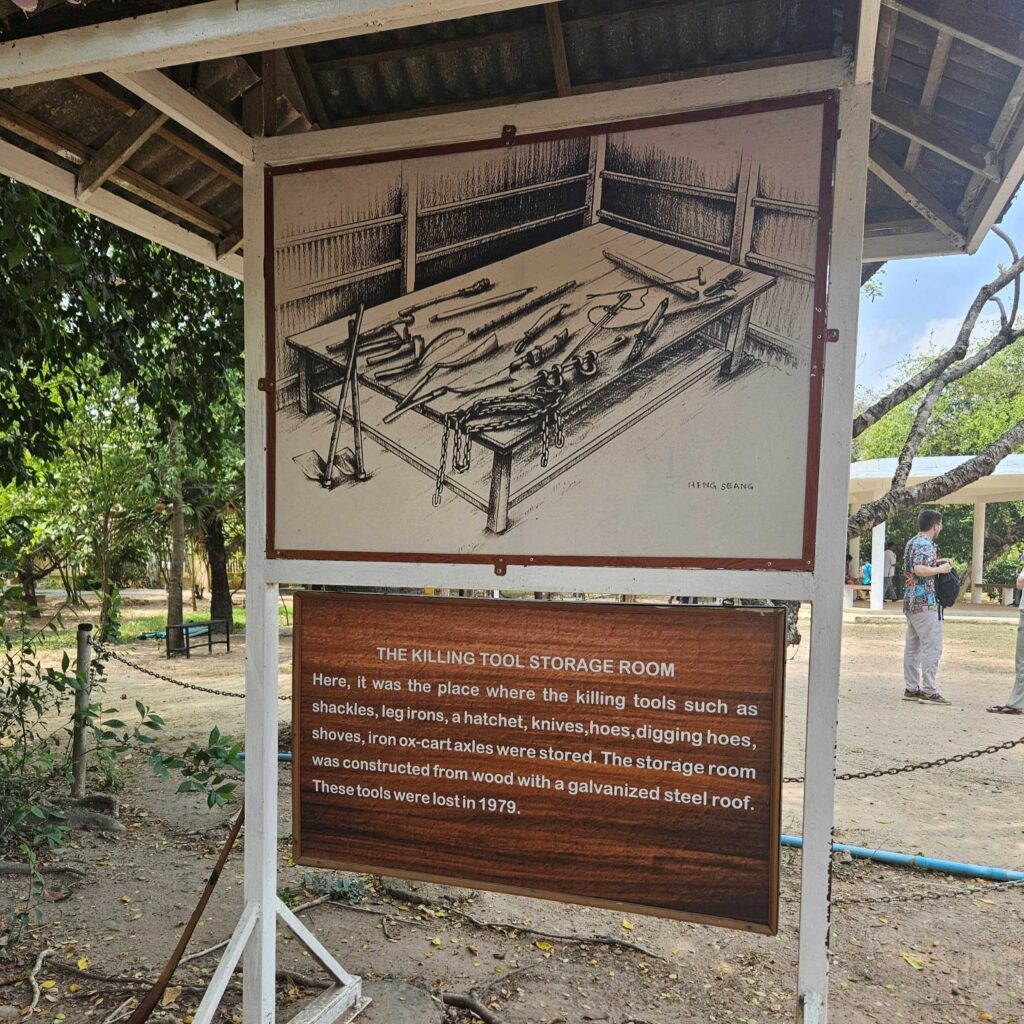
Even though I have visited Auschwitz, I was not prepared for the brutal recollection of what happened here. The first thing you learn when visiting Choeung Ek is the arrivals process. Victims were transported on trucks during the night, blindfolded, to conceal the location. To say these victims faced a gruesome end is an understatement. They were beaten to death by tools. Never were the victims afforded the mercy of being shot, as bullets were scarce and expensive, and gunshots would alert others. Instead, a loudspeaker played daunting music to cover the screams, whilst a generator filled the holding room with noise as soldiers could not kill the victims fast enough.
Mass graves stretch right across the site. Decomposing bodies soon filled these graves and the air with the stench of death. One solution was to cover the bodies in DDT, an extremely toxic chemical, which served two purposes—one being to avoid suspicion, as this insecticide was used in agriculture, and the other to kill those still alive in the graves. During monsoon season, bone fragments become uncovered in the shallow graves. Though visitors are warned, nothing prepares you for seeing it.
Whilst this aspect might sound harrowing, the hardest part of this visit is near the end. You might notice a tree adorned with bracelets; these are not decorations but memorials to victims, placed by locals in remembrance. This is The Killing Tree. I cannot describe the scenes that happened here, only refer to the sign, which reads, Killing tree against which executioners beat children. The audio guide is an absolute must here, as it will explain exactly what happened and recall the discovery of the mass grave next to the tree.
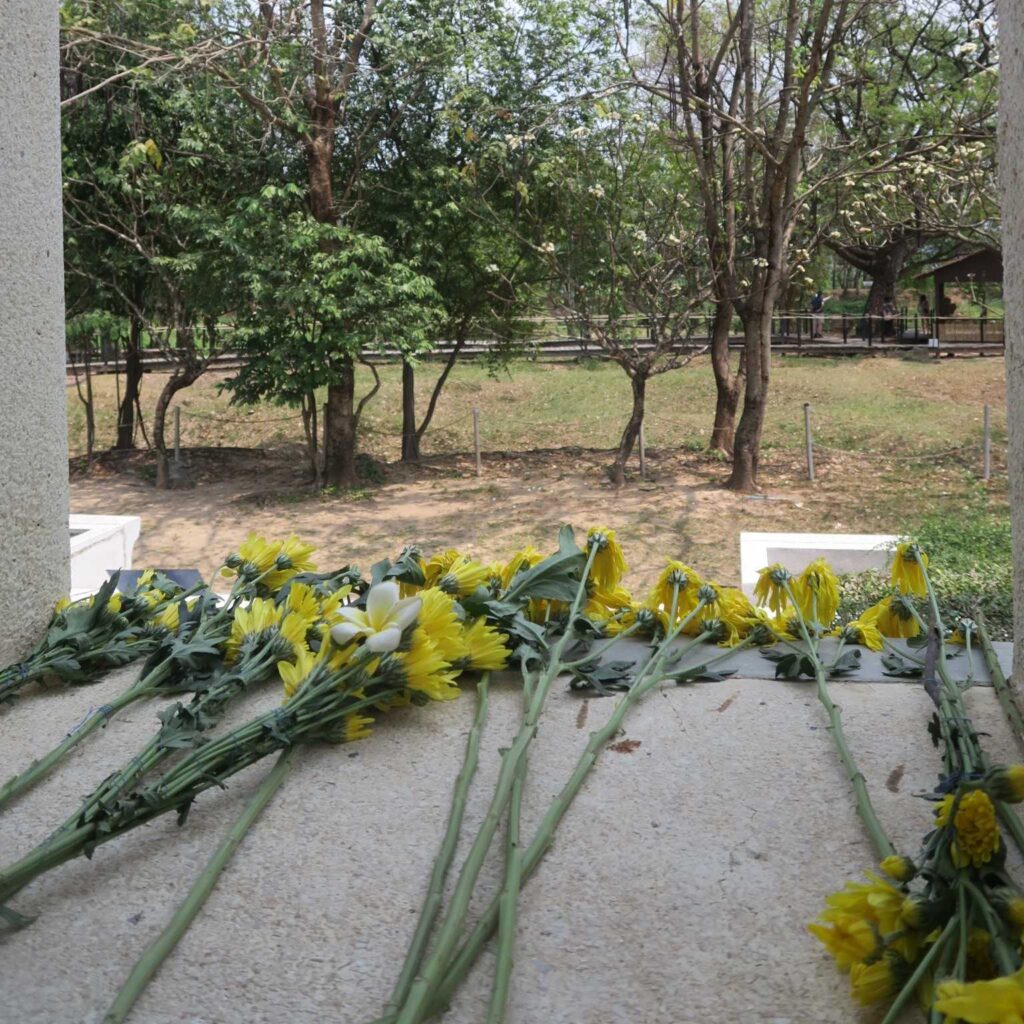
In memory of all victims, a memorial stupa was built in 1988. This tall stupa contains the bones found at the sites of the mass graves, sorted by age of the victims. Whilst a memorial, this part is equally as disturbing given that you can see the impact of the blows to the victims and the damage caused by the executioners. By this point, it is common to see people moved to tears. You can join the locals paying respects by placing flowers. This simple gesture is part of the responsible tourism etiquette at memorial sites.
Responsible Visitor Etiquette at the Killing Fields
Respect here is key as this is a memorial with mass graves. This mindset is the essence of responsible travel in Cambodia. Do not treat this as a tourist attraction as this is a place for locals to grieve, where the sense of loss and tragedy is significant. For this reason, I chose not to take any photos. With grieving locals visiting the memorial, putting the camera away was a small act of respect.
Backpacker Quick Guide: Choeung Ek Logistics & Etiquette
How do I get to Choeung Ek? It’s about 10 miles outside the city. It’s best booked as a round-trip Tuk-Tuk (negotiate for $15–$20 USD total) or via a ride-share package that includes the return journey.
What are the opening times? The centre is open daily from 7:30 AM to 5:30 PM.
What is the entry price to Choeung Ek Killing Field? The total cost is $9 USD: $6 for entry and a mandatory $3 for the Audio Guide.
When Should I visit Choeung Ek Geocide Centre? Logistically, most people visit S21 first and then Choeung Ek. To avoid the intense midday heat, consider visiting Choeung Ek early and S21 in the afternoon. It is possible to visit both in the same day, but remember this will be a long and emotionally toiling day. If you have more time in Phnom Penh consider visiting on separate days.
What are the rules when visiting Cheoung Ek Genocide Centre? Dress modestly (shoulders and knees covered). Maintain silence during the audio tour. Absolutely NO posing, smiling, or taking selfies in front of memorials or the Stupa.
Why Responsible Tourism in Cambodia Matters More Than Ever
Walking away from the Killing Field, the most common question echoed in my mind: How could this happen? But the harder question is why did so few people face consequences? The leaders of the Khmer Rouge were not immediately brought to justice. Pol Pot fled to the countryside, living peacefully until 1998.
Even more shocking was that the United States continued to recognize the Khmer Rouge regime, using Cambodia to counter Vietnamese influence and power. Cambodia under the Khmer Rouge held a seat in the United Nations until 1993, long after the world knew the truth. It wasn’t until the turn of the 21st century that a handful of officials would finally face trial for their part in the genocide.
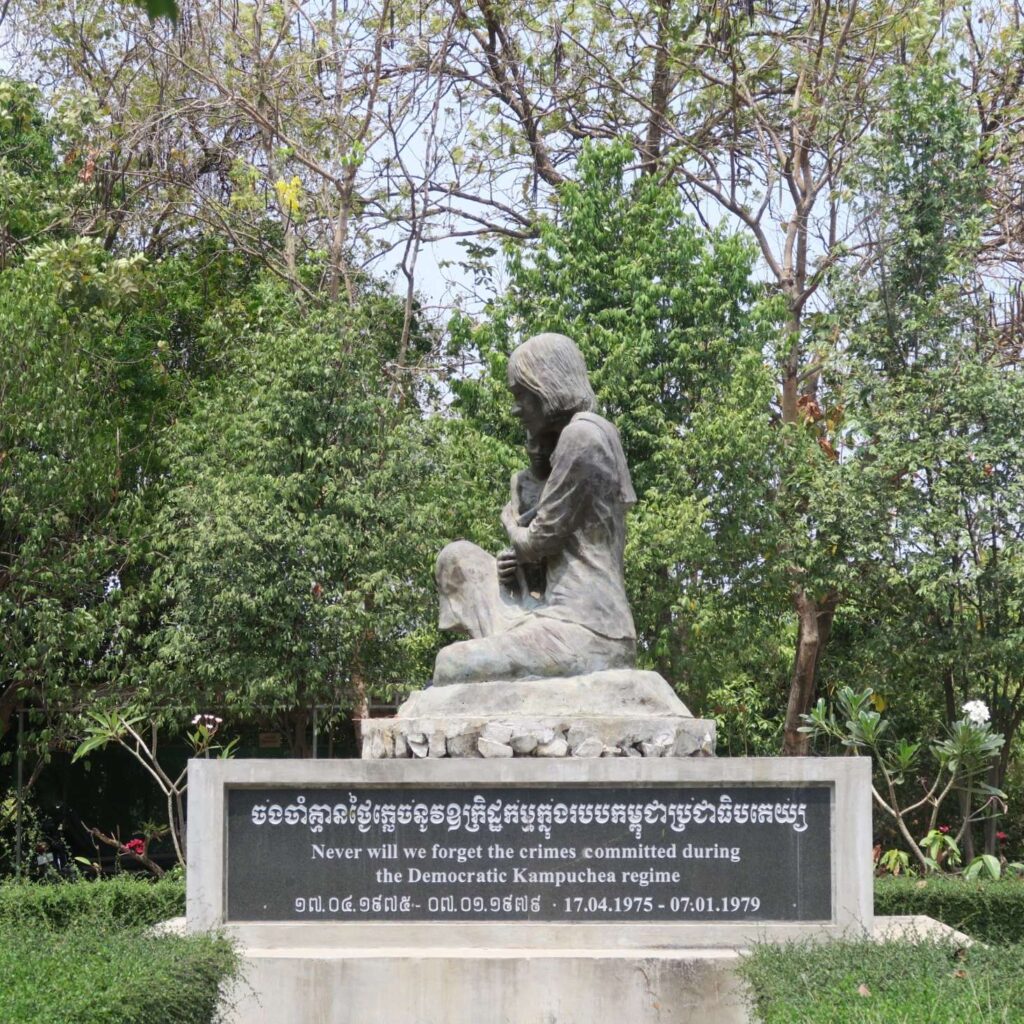
The revelation that the perpetrators were ignored is devastating. However, this also put the Khmer Rouge regime into perspective as one genocide in a long, shameful history from, the Holocaust, to more recently the Rwandan genocide and Bosnian genocide. The awful truth is that the soldiers committing these acts often resort to the same excuse: they were simply following orders. The difference here is the vibrant, hopeful society that emerged from the rubble. The people of Cambodia are not defined by 1975 but by their incredible ability to smile, rebuild, and welcome us, the travelers, into their healing nation.
Responsible Tourism in Cambodia Begins With Reflection
I constantly overheard backpackers saying Phnom Penh was boring and skipping it in favour of the beaches of Koh Rong or the temples of Siem Reap. Do not overlook Phnomh Penh. They are missing the most essential, meaningful lessons this country has to offer. Ethical travel isn’t just about collecting stamps or ticking off sights; it’s about going beyond the guidebook and confronting history.
You could spend your time seeing yet another temple, or you could spend it genuinely understanding a nation. Visiting Tuol Sleng and The Killing Filed for yourself is unlike anything you would read in a book or learn in the classroom. Going there, hearing from the people that lived it and seeing the actual proof is an experience you cannot comprehend. That is what responsible travel in Cambodia is all about.

Hiya Bottle Cap
Great article!
Really moving and well written.
I know a bit about the dark past but you really made me look at Cambodia in a different light for next time.
Have you watched the film “The Killing fields ?”
Thanks for reading my article, glad you enjoyed it!
I haven’t watched that film yet but it’s now on my watch list. I am interested to see how this portrays the dark history of Cambodia.
Safe travels.
Really moving to read about your travel in Cambodia and the killing fields how it affected their lives. You have really shown the reality of the country.
Well written
It’s a shocking side of the country that is often overlooked. I think its important for us backpackers to visit Phnomh Penh and learn the history 🇰🇭