
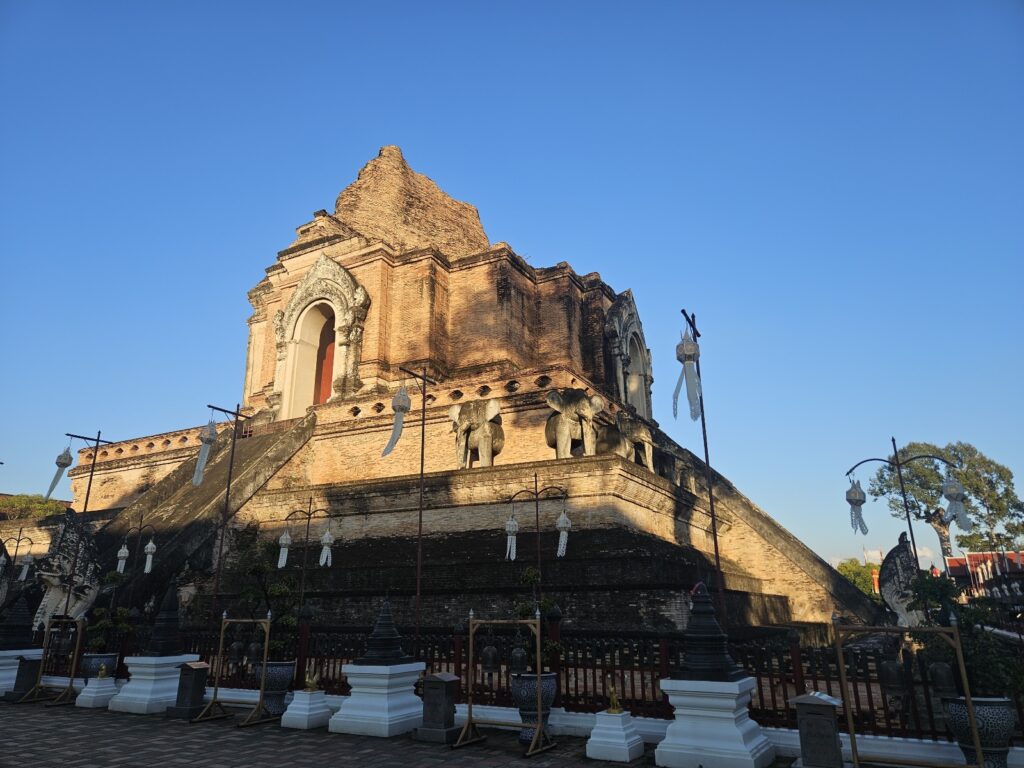
Backpacking in Chiang Mai has a way of ruining your onward travel plans. You arrive with a three-day itinerary and a flight booked for the islands, only to find yourself here weeks later, greeting your favorite street food vendor by name. It is Northern Thailand’s backpacker magnet, a city that quietly hooks you until you can’t imagine being anywhere else.
If you’re heading north, come prepared for more than just cheap eats and golden spires. This isn’t a rigid itinerary. This is your insider guide to understand the rhythm of a city that has drawn me back four times. To truly master backpacking in Chiang Mai, you’ll want to embrace the “sabai sabai”, or take it easy, lifestyle. Slow travel is the whole point of coming to Chiang Mai.
The Lanna Legacy: Why Backpacking in Chiang mai feels Different
To understand why backpacking in Chiang Mai feels worlds apart from the party-heavy south, you have to look back to 1296. Founded by King Mengrai, Chiang Mai (literally “New City”) was the capital of the Lanna Kingdom . While Bangkok was still a swamp, Chiang Mai was a thriving mountain city filled with golden spires.
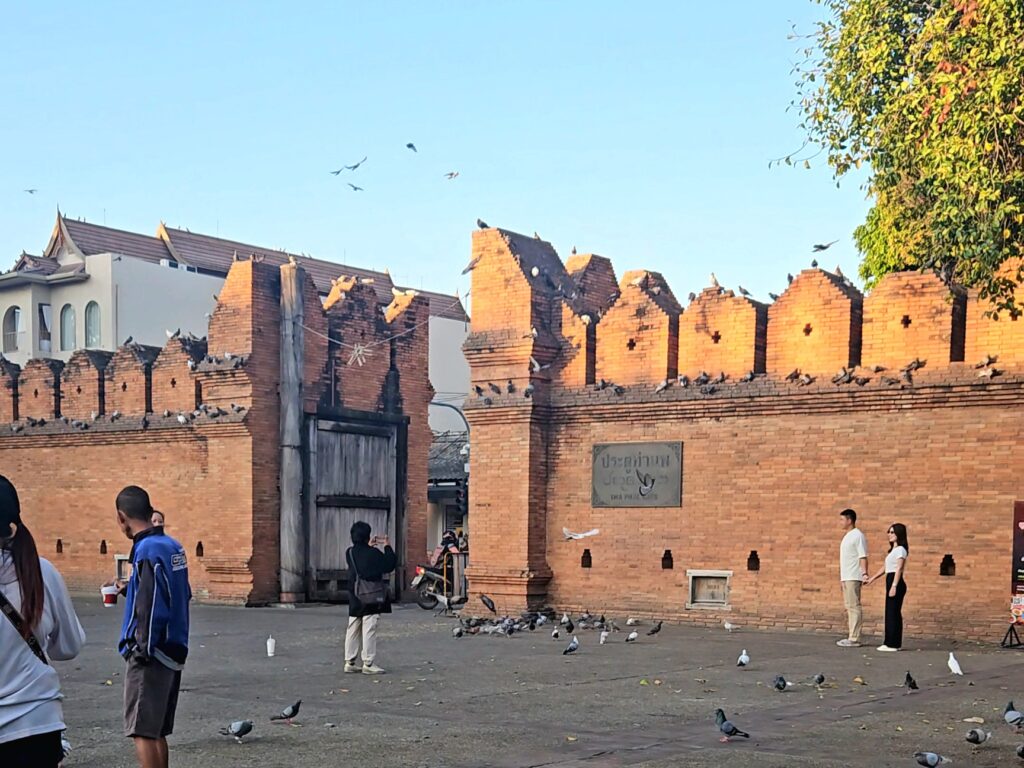
This Lanna identity is still the backbone of the city today . The architecture is darker and more intricate than the bright porcelains of Central Thailand. Inside the crumbling brick walls of the Old City, it feels like a living museum.
Chiang Mai doesn’t hit you like a neon nightclub or a beach postcard. The city moves on a slower rhythm, a blend of ancient tradition and modern traveler energy that defines the experience of backpacking in Chiang Mai.
Neighborhoods in the city, where to stay in Chiang Mai
Chiang Mai’s neighborhoods each have their own energy. Choosing the right one sets the tone for your trip.
Old City – The Social Core: This is where most backpackers head first, and for good reason. Hostels like Stamps are legendary for their family dinners and nightly social scene. Days blur into temple hopping, smoothie bowls, and afternoon naps. This area is walkable, historic, and buzzing without being chaotic.
Nimmanhaemin – The Digital heart: West of the moat, Nimman provides cafe culture throughout. Specialty coffee shops, coworking spaces, brunch menus in English make it a place where digital nomads plug in. Grab a latte at Ristr8to and you’ll see the appeal.
Santitham – The Local Zone: This is where you go to stop feeling like a tourist. The area offers cheap apartments, zero English menus, and truly local food at a local price. If you’re staying long-term, this is the move.
Riverside – Sunset Mode: Slow evenings and river breezes give this a more chilled vibe. It’s where you go when hostel life gets loud and you need a beer that isn’t in a plastic cup.
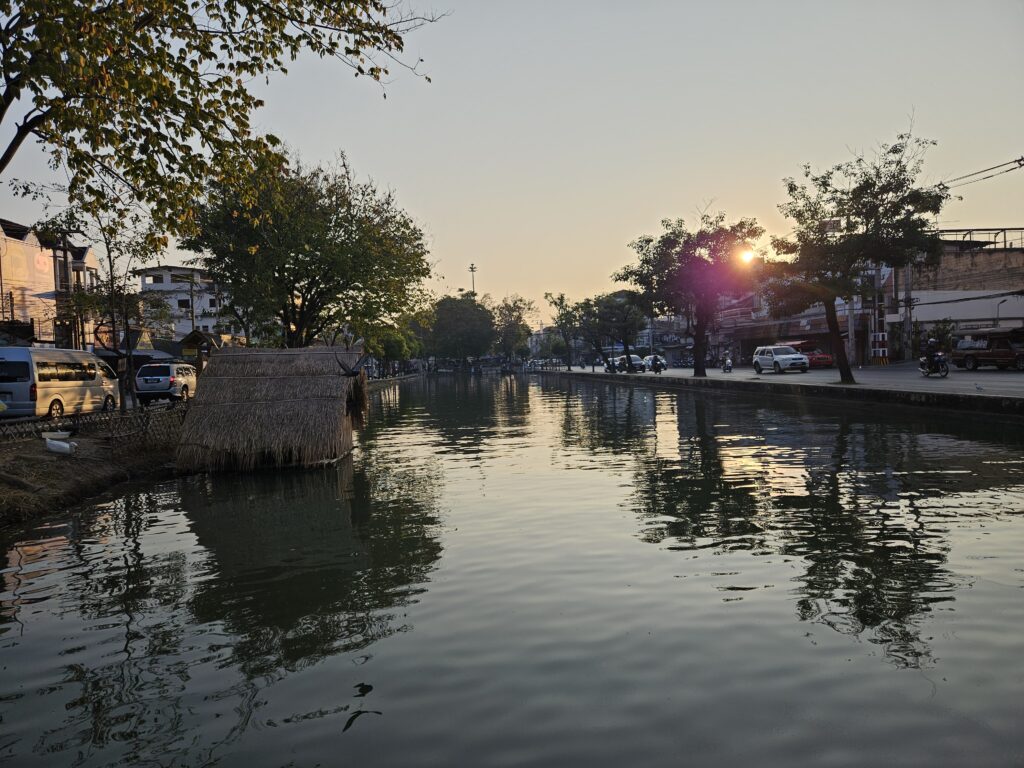
Tip: Explore beyond your base as Chiang Mai rewards those who wonder and discover new places.
Realistic Backpacker Budget in Chiang Mai
The prices are the real reason backpackers don’t leave. Here’s what you can realistically expect to spend in Chiang Mai:
Food in Chiang Mai:
Street meals for 40–60 baht including pad thai, khao soi, sai ua (Northern Thai sausage) and mango sticky rice. Eat where locals queue for the best experience. Follow the locals in officewear grabbing lunch as they are experts in finding top food at a low price.
Accommodation in Chiang Mai:
You can get a dorm bed for as little as 180–300 baht/night. Popular hostels come in higehr at 500-600 baht per night. Private rooms are priced at 400–800 baht/night. Long-term apartments are beyween 5,000–8,000 baht per month (location dependant).
Transport:
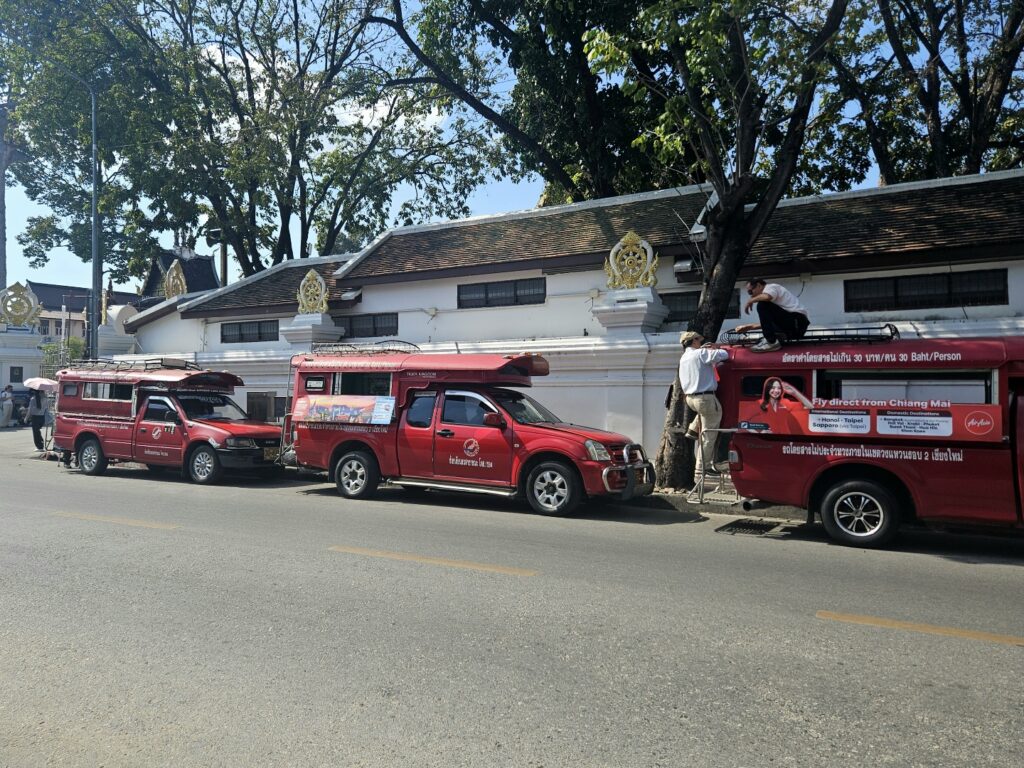
Scooter rental is slightly more expensive in Chiang Mai at 200–350 baht/day. Ride sharing or Grab are inexpensive at 100 baht for the average journey, though the price jumps massiveky the further you go from the city. Red trucks (songthaews) cost 30–60 baht around old town. Walking is also a good option to burn off khao soi.
Extras:
when in Thailand, its inevitable that you treat yourself to a few extras. Expect a Massage to cost 150–300 baht. Laundry 30–50 baht/kilo. Muay Thai session 200–400 baht. Large beer 80-100 baht.
Total daily budget in Chiang Mai:
Broke backpacker: £10–£15 ($13–$20)
Comfortable backpacker: £20–£30 ($25–$40)
Seasonal tip: during peak season (December to February), expect accommodation prices to be around 25% higher.
If you want to stretch your money even further across Southeast Asia, I’ve broken everything down in my ultimate backpacking budget guide.
Prices have barely shifted since my last visit in 2024, something you won’t see on the islands anymore. Chiang Mai remains one of Thailand’s last true budget havens.
Food in Chiang Mai: the Culinary Heart of Thailand
Food in Chiang Mai is a cultural adventure. Northern Thailand has a distinct cuisine that is influenced by its proximity to Myanmar and Laos. This makes the food herbier and heavier with fermented flavours taking centre stage.
If you want the local level of spice, tell the vendor you want it “Phet Phet“. Be warned, the Northern Thai palate is significantly hotter than what you find in tourist-heavy beach towns. Even a little spice (nit noi) here will make you suffer whilst locals laugh.
Night markets, notably Chiang Mai Gate and Chang Phuak, are food lovers’ paradise. Steam from curry bowls and smoke from grilled meats rise from the various food carts that line the street. Every city has a food icon but Chiang Mai’s wears a cowboy hat and serves legendary khao kha moo (pork leg stew) after dark.
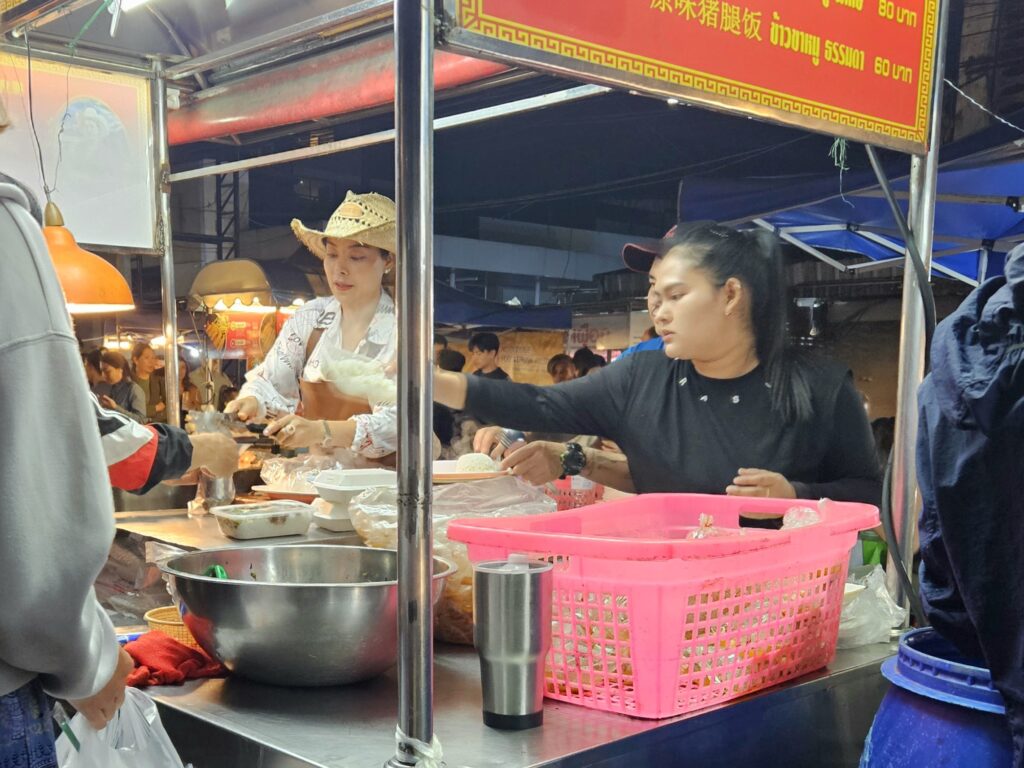
Khao soi is the Northern Thai signature dish: egg noodles in rich coconut curry, topped with crispy fried noodles, pickled cabbage, and a wedge of lime. One spoonful and your brow starts sweating but your tastebuds have a new experience. You’ll argue about the best spot with strangers for weeks as everyone has their favourite Khao Soi spot.
Other dishes deserve credit in their own right.
Sai Ua – Northern herbal sausage, smoky and lemongrass-heavy typical of the region’s flavours.
Nam Prik Ong – Spicy pork and tomato dip eaten with raw veg.
Khanom Jeen Nam Ngiao – Fermented rice noodles in pork broth.
Mango sticky rice – obvious choice but a backpacker favourite.
Burmese curry – uniquely spicy and sour flavour compared to Thai curry.
Pro tip: Eat like a local. Eating in Chiang Mai isn’t about filling up as it’s a social experience. You sit next to strangers, whilst sharing sauces, and comparing spice tolerance like it’s a competition.
Things to do in Chiang Mai on a Budget
Chiang Mai’s charm is partly because there is so much to do.
Temples at sunrise: Wat Phra Singh and Wat Chedi Luang. Dress modestly, remove shoes, and respect silence. Murals tell centuries-old stories of Lanna kings and Buddhist legends.
Bua Thong Sticky Waterfalls: Climb barefoot on limestone that magically doesn’t slip. It’s an interesting experience that provides plenty of fun and laughs. This waterfall is truly unique, you won’t experience this anywhere else.
Baan Kang Wat: This is an artist village of teak houses. Ceramics, sketchbooks, coffee shops. You can let your inner creative side flow here.
Wat Pha Lat (Monk’s Trail): Instead of taking a red Songthaew to the top of the mountain, hike the Monk’s Trail. It leads you through the jungle to a hidden forest temple that feels like something out of an Indiana Jones movie. It’s quiet, moss-covered, and free of the crowds.
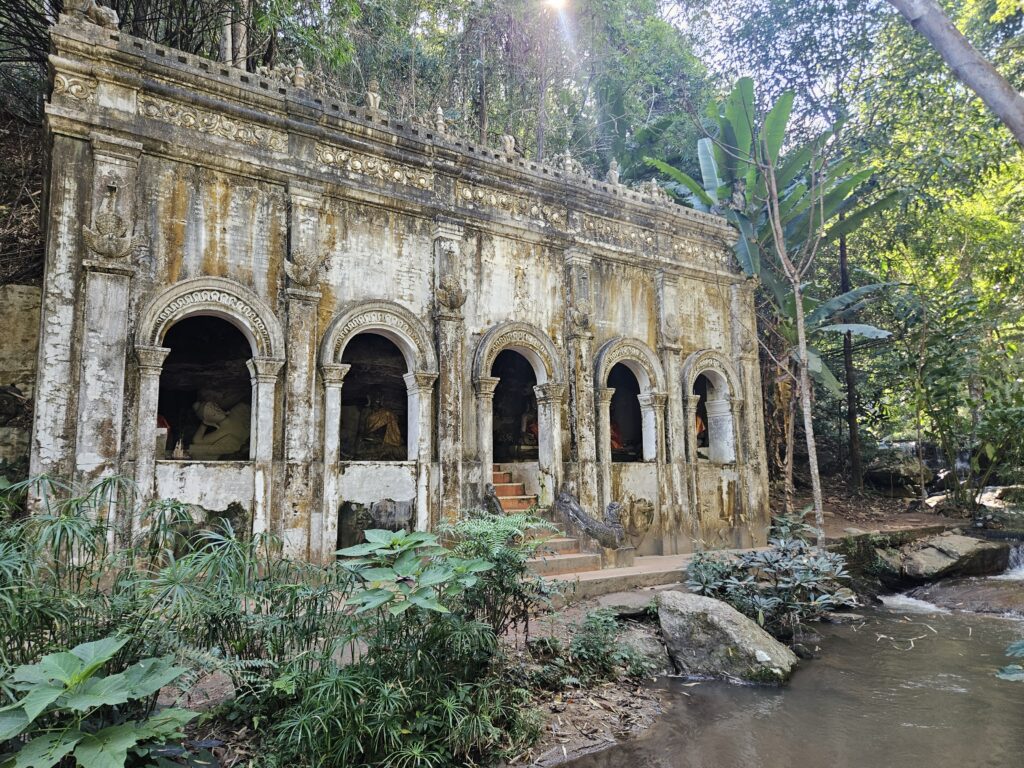
Wat Sri Suphan (Silver Temple): Hand-hammered silver walls, inside and out. Built by local silversmiths. The temple is just outside the city walls but well worth the walk.
Insider tip: Festivals like Yi Peng (lantern festival) or Songkran (Thai New Year) offer magical seasonal experiences so plan your visit around them if you want to experience the local way of celebrating.
Optional Extras and Day Trips in Chiang Mai
Northern Thailand is a playground just outside the city walls. There are many additional activities that are worth the extra spend if you can stretch the budget.
Doi Inthanon:
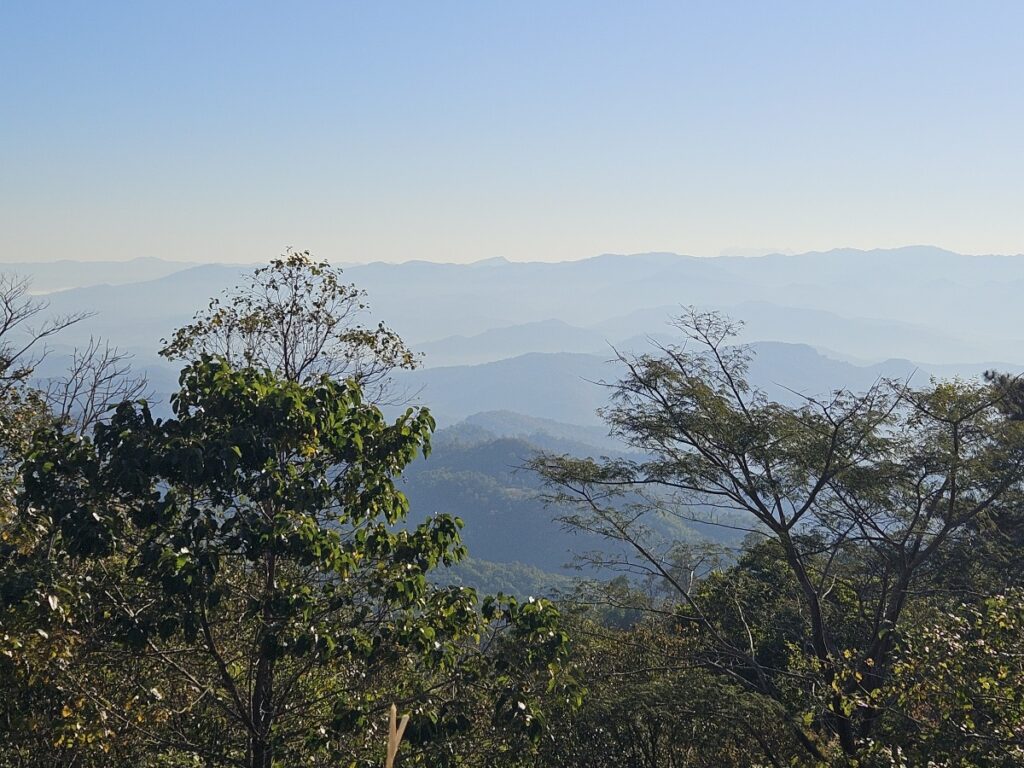
This is Thailand’s highest peak that delivers misty hills, waterfalls, and Karen hilltribe villages. Sunrise hikes offer amazing views but require a very early start. You could do this as part of a guided tour, or make your own way up if you are confident driving the steep mountain roads.
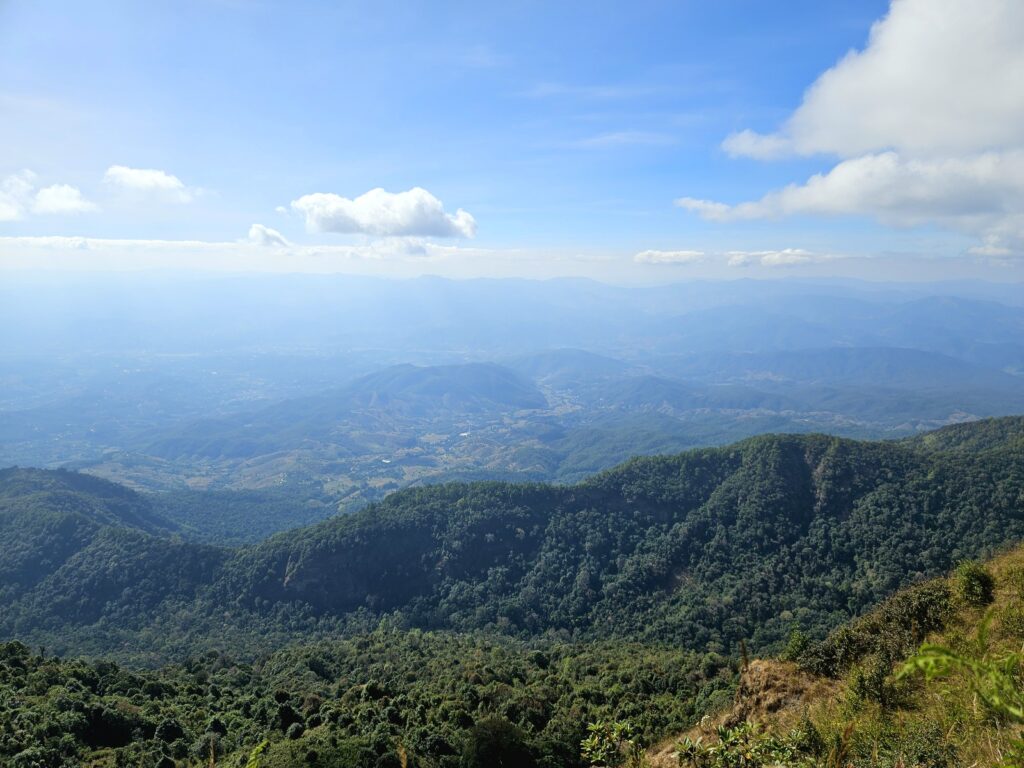
Local tip: Ask vendors about hidden trails or little-known temples. This way you’ll find far fewer tourists and richer experiences.
Grand Canyon Waterpark
The Chiang Mai Grand Canyon Waterpark is a fun, adrenaline-packed break from temples and markets, with cliff jumps, inflatable obstacle courses, and zip lines over turquoise water. It’s not cheap at 950 baht per ticket and additional costs of transport. Though if you’re craving something playful and social, it’s a great half-day adventure with fun backpacker energy.
Jungle Trek:
If you really want to feel the spirit of the North, a jungle trek is essential. My 3-day, 2-night (3D2N) journey was the highlight of my time backpacking in Chiang Mai. We headed into the jungle of the Mae Taeng region for a true wilderness experience.
The Trek: You’re hiking 4-6 hours a day through dense bamboo forests, crossing shallow streams, and ascending ridgelines that offer views across the mist-covered valleys. Expect it to be a challe ge, but doable for someone of average fitness.
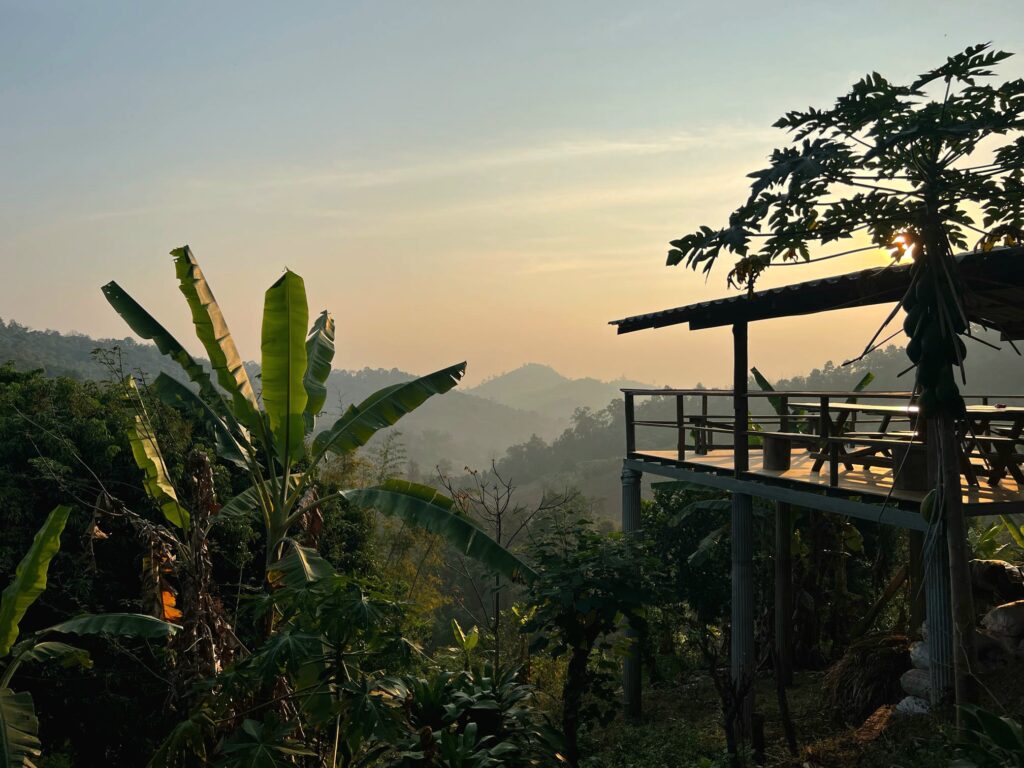
The Homestay: Staying with a local Karen hill tribe family is a lesson in humility and hospitality. There is no Wi-Fi or signal so no contact with the outside world. Sleeping arrangements are a thin mattress on a bamboo floor and the sound of the jungle, or a hammock if you can brave the insects. Helping our hosts cook dinner over an open fire provided a connection that most people miss out on if staying only in Chiang Mai.
The Bamboo Raft: The final day involved trading our hiking boots for a handmade bamboo raft. Floating down the river and seeing the jungle from the water level is the ultimate “slow trave
Ethical Elephant Sanctuary
As the hub for elephant tourism, your choices here matter. Avoid any sanctuary that markets riding or shows. True ethical backpacking in Chiang Mai means supporting elephant sanctuaries that focus on observation from a distance. Leading organisations like Elephant Nature Park or BEES prioritize the animal’s autonomy. If the facility allows “bathing,” you should avoid it as the most ethical standard is now “Hands-Off” observation. Expect to pay 2,500–5,000 THB for a day trip which covers the immense cost of their care and land.
Chiang Mai Culture: The Bits Guidebooks Miss
When backpacking in Chiang Mai you should be ready for at least one early start. Watch monks walk barefoot as locals offer food during morning alms. This is a daily ritual where locals offer food to monks as an act of merit-making, believed to bring good karma and spiritual balance. Observing quietly and respectfully is essential, so no taking photos unless invited.
Cover shoulders. Remove shoes. Sit lower than monks. Small things show big respect.Chiang Mai feels spiritual without being preachy. People smile. Nobody rushes. You start slowing down without noticing.
Staying safe in Chiang Mai
Scooters offer freedom but the trade off is they are dangerous. Thailand has one of the highest rates of traffic accidents involving scooters. If you are inexperienced Chiang Mai is not the place to learn.
Wear a helmet as it could save your life. There are certain things you should know before renting a scooter and mistakes to avoid.
The city is generally very safe and very few people ever run into trouble. Stay alert and don’t fall for the common taxi meter broken or temple closed tuk tuk scams that also exist in Bangkok.
Staying connected
There are plenty of cafes with free WiFi throughout the city. When you are on the move, there are two options for mobile data: eSIM or physical SIM.
AIS or DTAC physical tourist SIMs are cheap. The downside is you have to take your existing SiM out which is easy to lose. eSIM packages can be more convenient as these are downloaded straight onto your phone, but the price of large and unlimited data deals is slightly more expensive. My advice is to see if there are any sign up bonuses with Saily or Airalo to get money off.
Reality Check: Is Chiang Mai for You?
I have to be honest and share the “unpolished” side of backpacking in Chiang Mai. It’s not all fun and games and there are definitely some key things to bear in mind before jumping on the night bus.
Burning Season in Northern Thailand (Feb to April)
In my experience the burning season was the worst aspect of backpacking Northern Thailand yet something I hear very few people mention. Farmers burn crops, and the smoke gets trapped in the valley. The air quality (AQI) can become some of the worst in the world. The smoke is so thick that locals wear masks. Many leave town to protect their health.
Warning: Do not plan your time backpacking in Chiang Mai during late February, March and April.
The Vibe Divide
You will meet the “Spiritual Backpacker” wearing elephant pants, booking a yoga retreat and living for night markets and hostel beers. On the other hand the “Digital Nomad” spends their day buried in a macbook fuelled by coffee. These worlds coexist but rarely overlap. pick the right area to meet the crowd that suits your travel style.
If you are looking for a 24/7 party scene like Koh Phangan, you won’t find it here. The bars are more chilled, and the energy is social rather than outright party. There is a ‘club’ Zoe in Yellow but this feels more like a backpacker street party than a proper nightclub.
Chiang Mai isn’t for nonstop party-goers or luxury travelers. The vibe here is relaxed, social, and sabai sabai. It’s geared towards solo travelers seeking community, budget backpackers chasing cheap eats and digital nomads bouncing around coworking spaces.
Families or luxury travellers may find it quieter than expected. If your idea of a good time is beach days and parties, this probably isn’t your scene. But for anyone embracing backpacker life, spontaneous adventures, and cheap Thai food, then Chiang Mai will feel like home.
If you’re craving chaos and late nights, Bangkok might be more your scene. Here’s my 3-day Bangkok guide if you’re heading south next.
Why Visit Chiang Mai?
Chiang Mai quietly hooks you. You come for a few nights and somehow end up staying longer or being drawn back time after time. The temples, street food, waterfalls, mountains, and markets stick with you long after you’ve gone.
From 40 baht pad thai to steaming bowls of khao soi, scooter rides to hidden waterfalls, and wandering ancient temples with no agenda, backpacking in Chiang Mai feels real. Everyday offers something new and there’s always more to do. Plans change, friendships form quickly, and adventure is born.
The city proves that cheap doesn’t mean sacrificing a good time and slow doesn’t have to be boring. Chiang Mai isn’t somewhere you breifly visit but a backpacker’s home away from home. A place you could easily settle, build a routine and feel part of the place. A temporary home that makes you lobe travelling.
So pack your bag, follow the smell of street food, climb a waterfall and don’t be surprised if you end up extending your stay. Leaving can wait!

Thanks BottleCap.
Another great read packed with some very useful information – things I’m sure will come in very handy in the future.