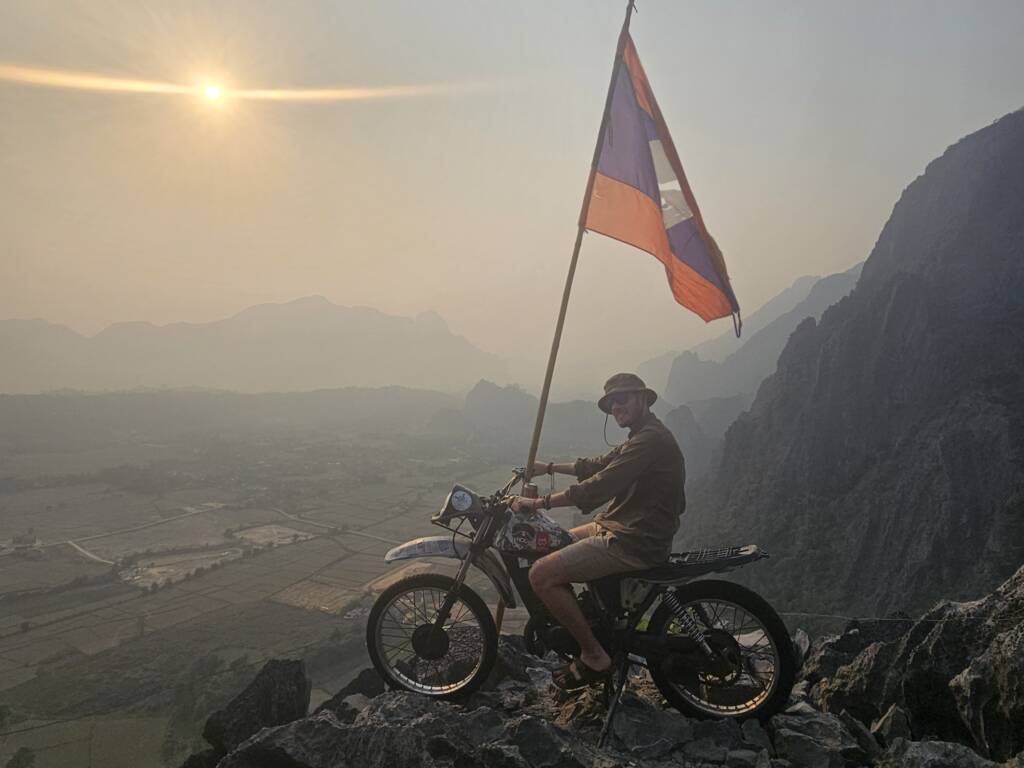
Stop dreaming and start packing, because this post outlines the definitive 6 month Southeast Asia backpacking itinerary. It cuts through the clutter to combine classic highlights with hidden gems that fulfill your craving for real adventure. This itinerary opens with the classic backpacker loop of Thailand, Laos, Vietnam, and Cambodia, before continuing south into Peninsular Malaysia and the breathtaking islands of Indonesia, with modern Singapore as the grand finale. All while making the most of your money with budget tips and tricks.
This itinerary is meant to inspire you and help you decide where to visit; it is by no means set in stone. Plan the perfect 6 month Southeast Asia backpacking itinerary using this outline as a guide. This is your sign to finally hit the road.
Table of Contents
Planning Your Southeast Asia Backpacking Route: Best Time, Starting Point, and Following the Banana Pancake Trail
You’ve decided on an epic 6 month Southeast Asia backpacking itinerary, the next step is planning. The first thing to acknowledge is that no matter how perfectly you plan, your route will unravel. That’s not a failure; that’s part of the adventure. However, ‘going with the flow’ shouldn’t mean ignoring logistics entirely. Backpackers who skip the framework often burn out, face visa issues, or blow their budget early.
So we will cover that essential, tried-and-tested foundation. Before you book that flight, remember the basic rules of the road: why you should go, when to go, and where you need to start. This guarantees a hassle-free and completely amazing Southeast Asia backpacking route.
The Banana Pancake Trail—and Why It Still Works
The Banana Pancake Trail is well-known among backpackers, so you may be concerned that the route is too ‘touristy’. The reason tourists follow this well-trodden path through Thailand, Laos, Vietnam, and Cambodia is that it remains the definitive foundation for any sucessful Southeast Asia backpacking route. The route is logistically easy, safe, and incredibly cheap.
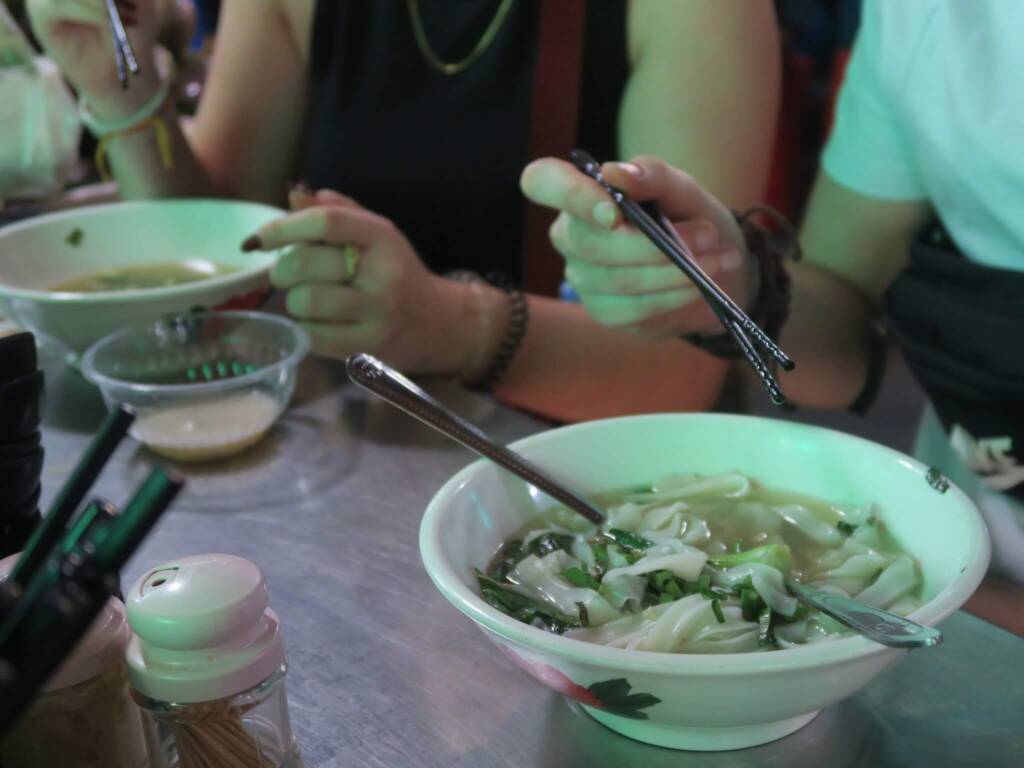
The entire infrastructure, including hostels, trains, and ferries, is designed with budget backpacking in mind. For $30 a day, you can eat some of the greatest street food in the world and travel comfortably. In reality, the window for extremely low-budget travel is closing as prices are rising and those “hidden gems” are becoming more visible every day, so don’t wait around.
Sticking to this established route can avoid planning hassles and save valuable travel days. Most importantly, it ensures that you will meet other travellers. This is more than just a backpacking route; it’s a support network that has been established over many years, allowing you to concentrate on collecting enough stories, or bottle caps, to last a lifetime.
When is the best time to Backpack Southeast Asia?
If you can, plan your 6 month Southeast Asia backpacking itinerary around the weather, not your calendar.
The Dry Season, which usually lasts from November to April, is generally the sweet spot for the majority of mainland Southeast Asia, including Thailand, Vietnam, Cambodia, Laos, and the west coast of Malaysia. April to September is typically the dry season for most of Indonesia and the Malaysian east coast.
Dry seaon is when you won’t have to wade through knee-deep puddles in Hanoi, and the beaches truly do look like postcards. You’ll be sharing these perfect conditions with more travellers, but this is the reason why it’s peak season.
Here is the reality: on a 6 month Southeast Asia itinerary, you will encounter different climates, but you shouldn’t overthink it. A Thai local once told me, “The monsoon doesn’t look at a calendar.”
Bottle Cap top tip: bring a waterproof rucksack cover and dry bag to keep your valuables dry in a downpour.
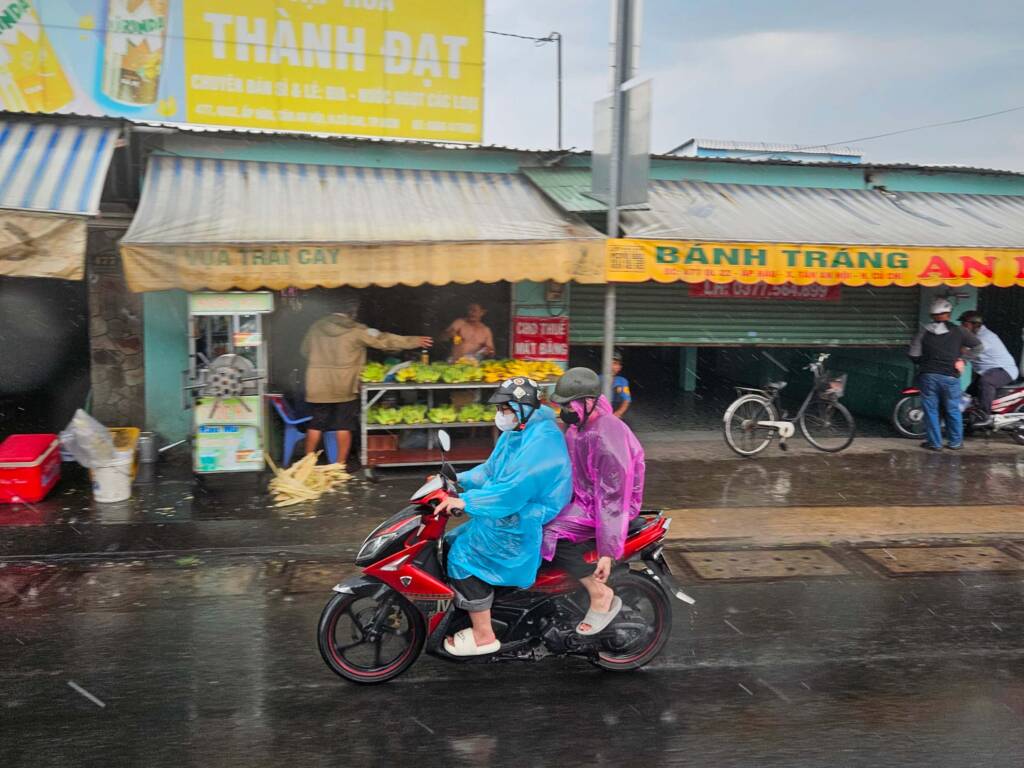
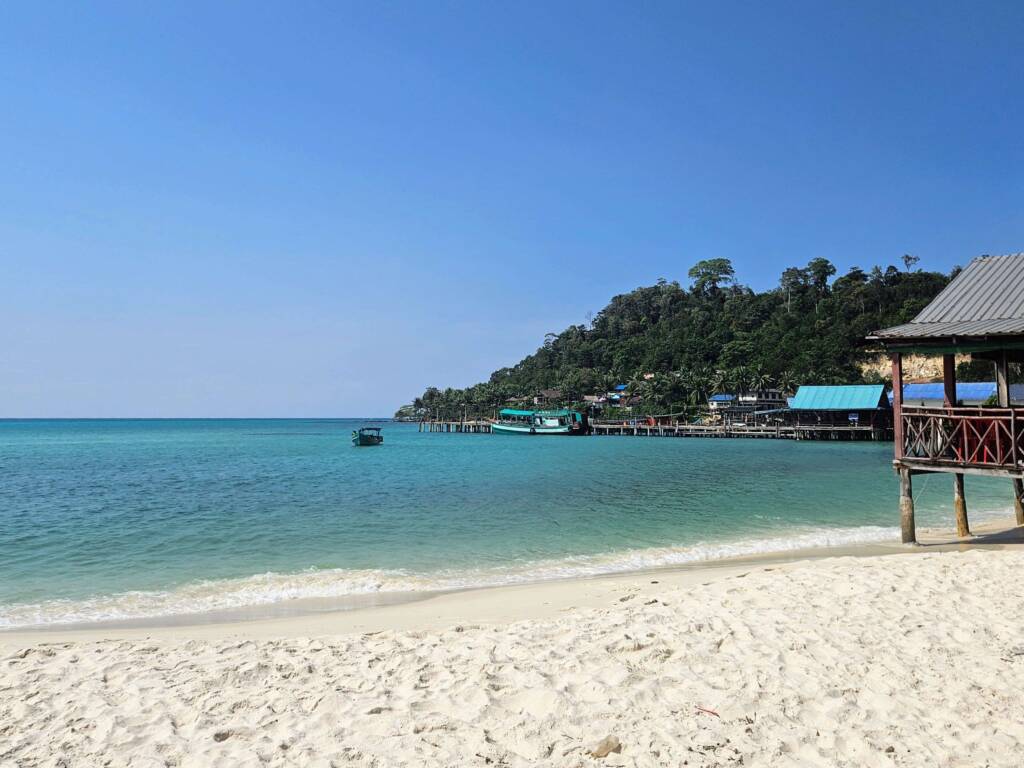
More importantly, the monsoon season, which runs roughly from May to October on the mainland, is not the end of the world. The rain rarely lasts all day, instead typically falling in heavy downpours for an hour or two before clearing up as the sun comes out again.
During the off-season, budget backpackers can benefit greatly from lower costs as accommodation and tour providers cut their prices. Famous locations like Angkor Wat will be considerably less crowded. It also offers opportunity for unique adventure. Despite the torrential rain and stormy seas during my first SSI Open Water dive on Koh Tao, underwater was calm and bursting with life. It was a true Bottle Cap moment!
The shoulder season, which includes March/April and October/November, offers a sweet spot of generally clear weather combined with a decrease in crowds and costs. Accept that you will experience a mix of rain and sunshine along the Banana Pancake Trail, but it’s all a part of the experience. Also, keep in mind that off-season sales will help stretch your budget.
Where to start your Southeast Asia Backpacking route?
You know when to go to Southeast Asia , but where do you start? This is the eternal backpacker debate. My answer is Bangkok, Thailand.
Think of Bangkok as the wonderfully chaotic and affordable entry point. It’s like the warm (humid) welcome to Southeast Asia. Bangkok offers excellent flight prices, strong infrastructure, and a great place to unwind before continuing along the Banana Pancake Trail. You can find everything you forgot to pack (as well as a few items you didn’t know you needed) which is why Bangkok is the ultimate Southeast Asia backpacking starter pack.
Starting in Thailand sets you up to chase the ideal weather along your Southeast Asia backpacking route. Thailand in December, Vietnam by February, and Laos before the April heat hits. By the time you hit Southern Thailand in April, Malaysia in May, and Indonesia in June you’ll have followed the sun all the way to the tropical islands.
A Bottle Cap Tip: Aim to avoid Northern Thailand and Northern Laos during the peak Burning Season (usually March and April), where seasonal crop burning significantly reduces air quality. Instead, head south towards the Thai islands or the Malaysian coast where the weather is still brilliant and the air is clear.
Although there is no ‘right’ direction, a strong start can set you up for the ideal trip. Keep in mind that the ideal itinerary is about strategic flexibility to chase every Bottle Cap Moment without going over budget or violating your visa, not strict precision. Be flexible and design the ideal Southeast Asia backpacking route that is best for you.
10 Essential Southeast Asia Backpacking Tips for Beginners: Safety, Budget, and Transport
Even though you’ve seen the map and decided your dream destinations, a 6 month Southeast Asia itinerary requires careful planning and not just wishful thinking. Time to stop dreaming and start planning! To keep your dream adventure enjoyable and stress-free, let’s cut through the clutter with expert tips on everything from creating a reasonable budget to handling Southeast Asia visa requirements and staying safe.
1. Don’t Try to do it all
Less really is more in Southeast Asia. Pick your favourite countries and explore them in depth. You’ll spend less time in transit and more time creating memories over street food and drinks. Avoid making the mistake of hurrying to visit multiple countries; that will only lead to burnout very quickly.
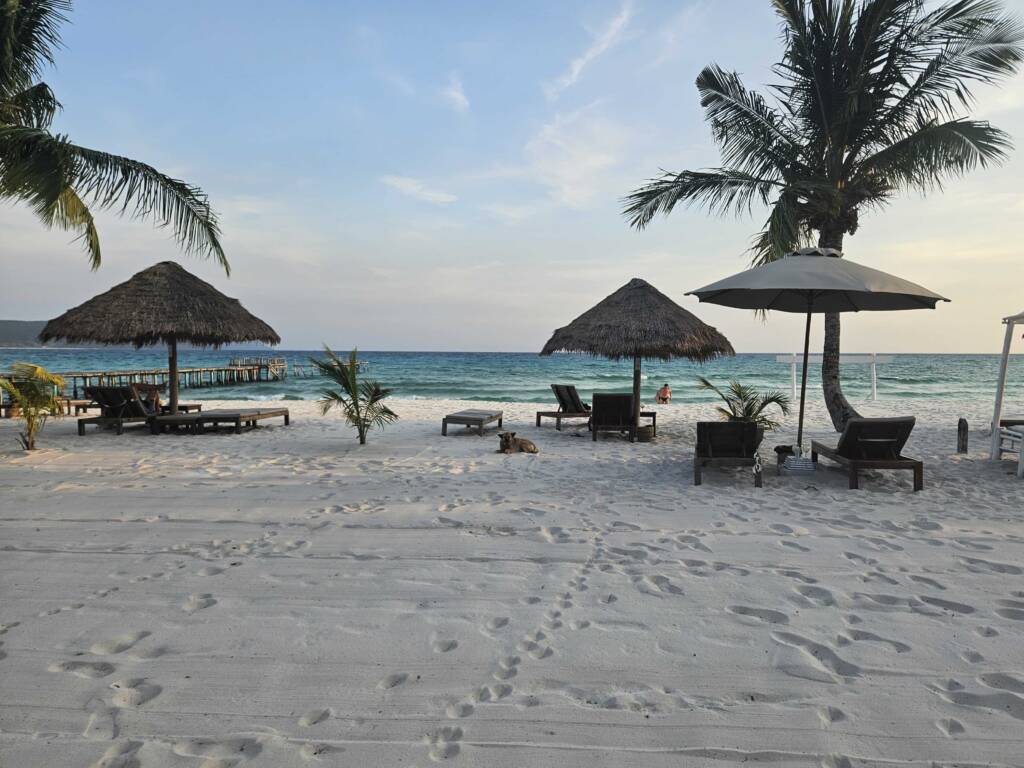
Focus on the connection to the countries you visit, rather than the number of borders you cross. If everything is starting to blur together (you’ll know when all the temples look the same), it’s time to change pace. Plan rest days, take time to rest & relax, and don’t try to cram everything in.
2. Start Easy To Build Confidence
Start your 6 month Southeast Asia backpacking itinerary in established hubs like Bangkok, Bali or Kuala Lumpur. These locations are packed with other first-time backpackers who are still getting their bearings, have dependable infrastructure, and are well-connected to other areas. The ease of locating English-speaking people and using effective transportation will enable you to rapidly gain that crucial confidence. Once you’ve found your travel style and had those first few Bottle Cap Moments, you’ll feel confident and eager to explore the obscure, more offbeat corners of the map.
3. pack light, pack right
Don’t overpack; while you are spending 6 months backpacking Southeast Asia, pack enough clothes for a week. Laundry services are abundant, cheap, and fast across Southeast Asia. Pack smart and light so you can quickly dash for a train, tackle stairs easily, and keep your shoulders happy.
Instead, focus on versatility. Pack layers as you’ll need a lightweight, waterproof rain jacket for monsoon downpours and a fleece for chilly mountain treks in Laos and Northern Vietnam. You can purchase anything you need locally, affordably, and with little hassle.
4. Southeast Asia Budget Tips
You need a simple system, not an accounting qualification. The most effective way to budget a 6 month Southeast Asia backpacking itinerary is to divide your entire trip budget into a daily or weekly allowance that covers accomodation, food, and local transportation. To build the ideal Southeast Asia budget consider:
- Use a simple app like Splitwise or Wallet to keep track of major expenses and categorise spends.
- Don’t worry about checking daily. Instead check your weekly total, and as soon as this creeps up, it’s time cut back with a few nights of cheap street food and cheap hostels.
- Remember to include a 15% non-negotiable contingency for unforeseen costs, emergencies, or those spontaneous, once-in-a-lifetime Bottle Cap Moments.
- To master currency exchanges, use easy, memorable multiplication tricks. For instance, in Malaysia, where 5 MYR roughly equals 1 USD (1 EUR/GBP = 5.5 MYR), you can quickly calculate how much something costs by mentally using the five times table. Whilst not exact, it will save the hassle of checking your phone before spending.
If you are unsure how to budget for a 6 month Southeast Asia Backpacking Itinerary, check out my Budget Backpacking Southeast Asia Guide for a detailed country-by-country cost breakdown.
5. Circular routes work best for Budget backpacking
The most efficient six month Southeast Asia backpacking route is circular. Make travel plans that begin and end in important travel hubs (for example, fly into Thailand, then pass through Vietnam, Laos and Cambodia before leaving via Thailand). This strategy keeps flight costs low, simplifies logistics, and makes crucial visa runs far easier when you need to extend your stay in a country.
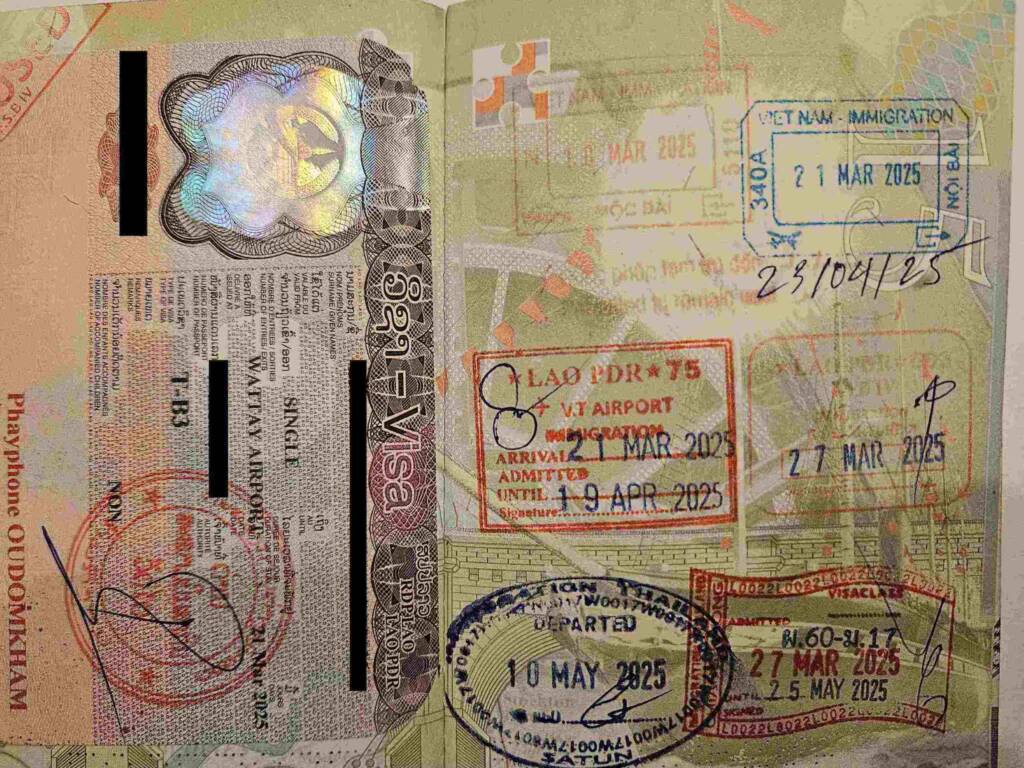
6. Southeast Asia Visa Requirements and border crossing Survival Kit
Border crossing can either be smooth, or a rough few hours. There are a few visa tips to help:
- Always check Southeast Asia visa requirements before traveling between countries as they often change.
- Carry crisp USD notes – Cambodia and Laos will not take any notes with marks or imperfections
- Keep passport photos and a pen handy at all times for arrival cards, this can speed up the visa on arrival process.
- Do not lose your entry card as it is required upon departure.
- Border agents demanding ‘stamping fees’ is common. Best to comply to get through.
- Apply apply for a 90-day visa for Vietnam and 60-day tourist visa for Indonesia in your home country before you leave. Useful if you intend to stay longer as it saves visa runs.
- For border crossings, especially flights, always have an outbound flight ticket ready on your phone (even if refundable). Providing onward travel is a common Southeast Asia visa requirement.
7. Build in buffer days for flexibility
The secret to long-term travel success is this top tip. Leave a few open days between countries for when you find that hidden beach, that epic waterfall, or that hostel you don’t want to leave.
Your Bottle Cap Moments, the spontaneous memories you’ll always remember, occur during these blank days in your calendar. Don’t allow a strict schedule to stop creativity.
More importantly, they provide some breathing room in case of anything unexpected and a buffer in case things do go wrong.
8. how to stay safe whilst backpacking
Although Southeast Asia is generally safe, spending 6 months backpacking Southeast Asia calls for caution. Being alert is your greatest strength. Here are some top tips to stay safe:
- Check current UK Governemnt travel advisories before crossing the border for any current scam alerts or political stability warnings that may impact your route.
- Don’t accept everything. When friendly locals try to sell you tours, scooter rentals or inexpensive drinks on the street, politely decline.
- To avoid common scams, book tours through your hostel or a reliable online provider. If a deal seems too good to be true, it is.
- Always keep a digital backup of all documents separate from your physical wallet. Don’t let a small mishap ruin your Southeast Asia backpacking route.
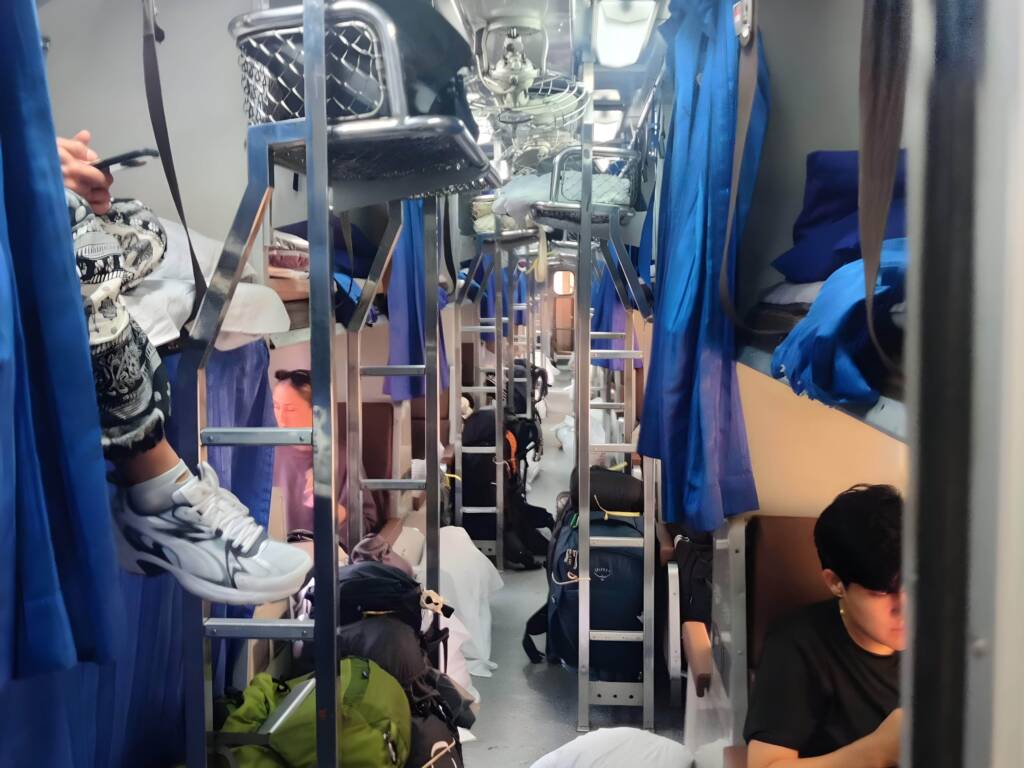
- Theft is common on night busses and trains in Southeast Asia so carry a small padlock for to lock your bag.
9. Transport Tips: Consider Cost vs Time
To become an expert in budget backpacking, weigh up time and cost of transport. Finding cheap transport in Southeast Asia is vital to keeping costs down, and swapping quick flights for local transport is often where the best stories happen.
- Night Trains/Buses: The ultimate cheap travel hack. You save money and get a night of accommodation, making these an iconic part of the Banana Pancake Trail.
- Scooters: Provide maximum freedom, but only rent if you know what you are doing. Know your limits, and understand the risks before riding. Here are 10 essential things to know before renting a scooter in Southeast Asia.
- Flights: Use these strategically to cover massive distances to save precious travel days.
- Local Buses/Ferries: Rely on these for overland borders and island hopping. They take longer, but they are key to budget travel and connect you with local life.
10. Listen to others but trust your gut
Every backpacker you meet will have an opinion on ‘the best route’ or ‘the must-see spot’. We all have our favourite destinations and places to avoid. Take advice, borrow ideas, but take it at face value. Your version of budget backpacking Southeast Asia won’t look like anyone else’s— make this journey entirely your own.
Now the groundwork is laid, let’s dive into the month-by-month blueprint: The Ultimate 6 Month Southeast Asia Backpacking Itinerary.
The Optimal 6 Month Southeast Asia Month-by-Month Itinerary
Now you’ve got the expert tips under your belt, it’s time to dive into month-by-month breakdown. The foundation of this 6 month Southeast Asia backpacking itinerary is the idea of slow travel, emphasising exploring in depth over speed. This typically works out around one month in each country, providing the ideal balance between visiting the must-see attractions and discovering the real hidden gems that make for Bottle Cap Moments. The monthly route breakdown and quick reference tables for each nation are provided to assist with essential transport, visas, and budgeting tips.
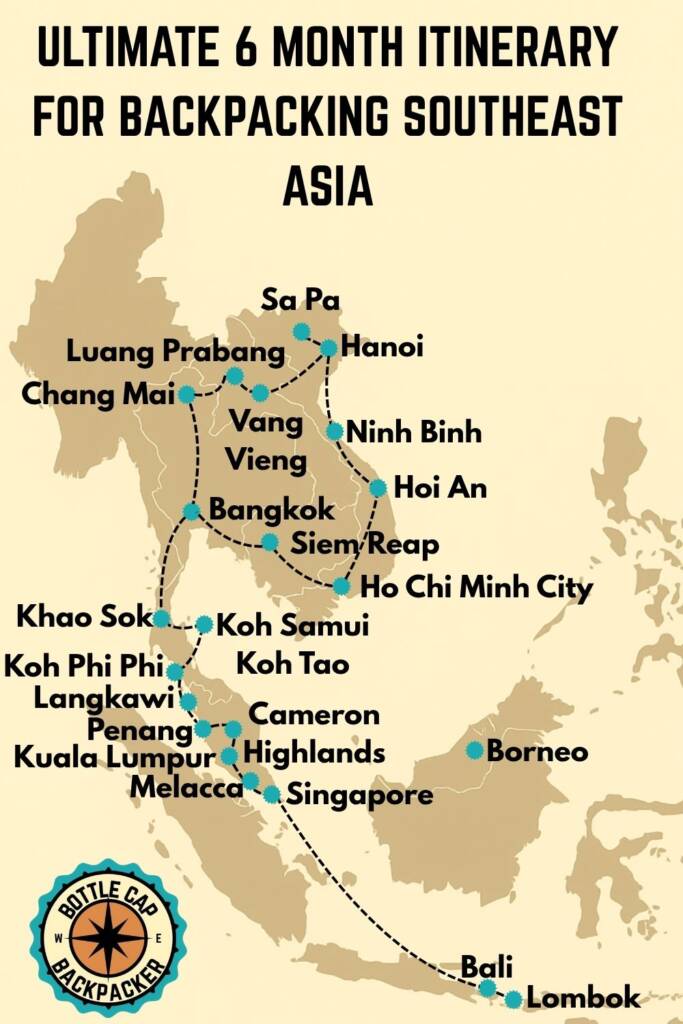
Crucially, this route is structured to maximise your experience in Vietnam, where I recommend travelling south to north. Because this builds up to the true highlight: motorbiking the Ha Giang Loop. Personally, starting with this high would make south Vietnam feel anticlimactic. Always leave the absolute best for last.
Month 1: Cambodia (Starting in Thailand)
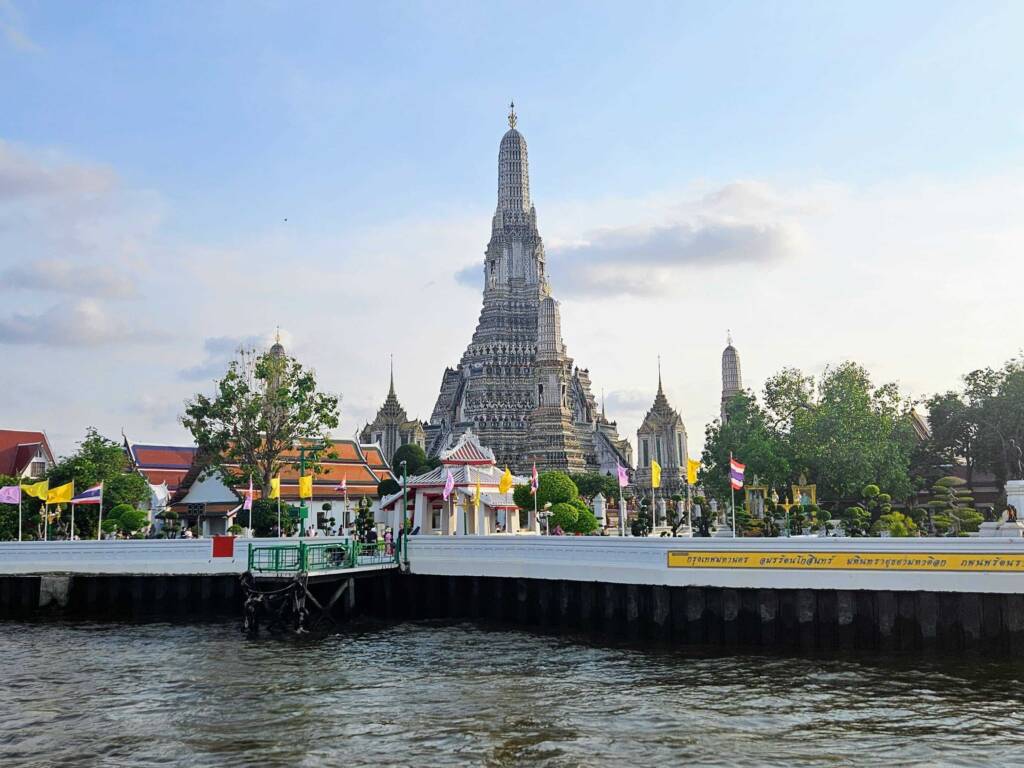
Get acclimatised in Bangkok by touring the Grand Palace, seeing the giant Reclining Buddha at Wat Pho, and watching the sunset behind Wat Arun (Temple of Dawn) from across the Chao Phraya River (top tip: take a local taxi-boat rather than an expensive tour). Explore Chinatown or Khao San Road, the notorious backpacker district.
IMPORTANT UPDATE: As of July 2025, land border crossing points along the Thailand-Cambodia border remain closed to tourists following the territorial dispute. You will need to take a flight for this part of the route. The security situation is very unpredictable.
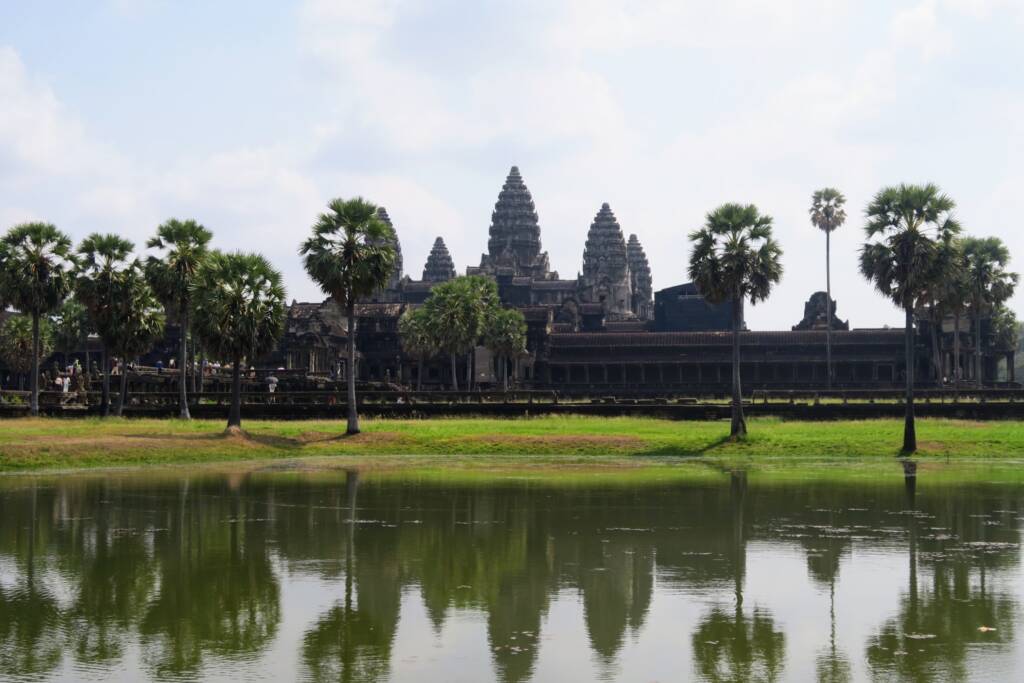
This Southeast Asia backpacking route crosses east into Cambodia starting with Siem Reap, home to the iconic Angkor Wat (don’t forget to grab your Angkor beer bottle cap) and Bayon and Ta Prohm temples. Nearby is Tonle Sap, the largest lake in Southeast Asia, which is home to a floating village, and Battambang caves where millions of bats emerge each evening.
Head towards Kampot to taste their renowned pepper and Kep to visit the famous crab markets, with a detour to the tropical islands. Sihanoukville is the gateway to the islands of Koh Rong and Koh Rong Sanloem, but I do not recommend stopping in the city. For those of you that love island life, consider spending more time relaxing in the sun on Koh Rong, Cambodia’s beach paradise, before heading to Phnom Penh for a dose of dark history. Spending two days in Cambodia’s capital will give you time to learn about the genocide by the Khmer Rouge at S21 Prison and the Killing Fields.
Cambodia: Quick Reference guide
Month 2: Vietnam Itinerary – South to North
Be prepared: the bus journey from Phnom Penh to Ho Chi Minh City can take an entire day as this border crossing is notoriously hectic either direction you cross. I spent 3 hours queuing for my passport to be stamped.
Continue along this Southeast Asia Backpacking route to Ho Chi Minh City, which is often referred to by its former name, Saigon. For a taste of Vietnamese history and culture, explore the nearby Mekong Delta. On your way north, you can choose to detour inland to Dalat, where you can hike the nearby hills, see the Crazy House or 100 Roof Cafe (the Maze Bar), and visit the Datanla waterfalls. Staying along the coast towards Nha Trang offers miles of white beaches and island adventures, or try kite surfing in Mui Ne.
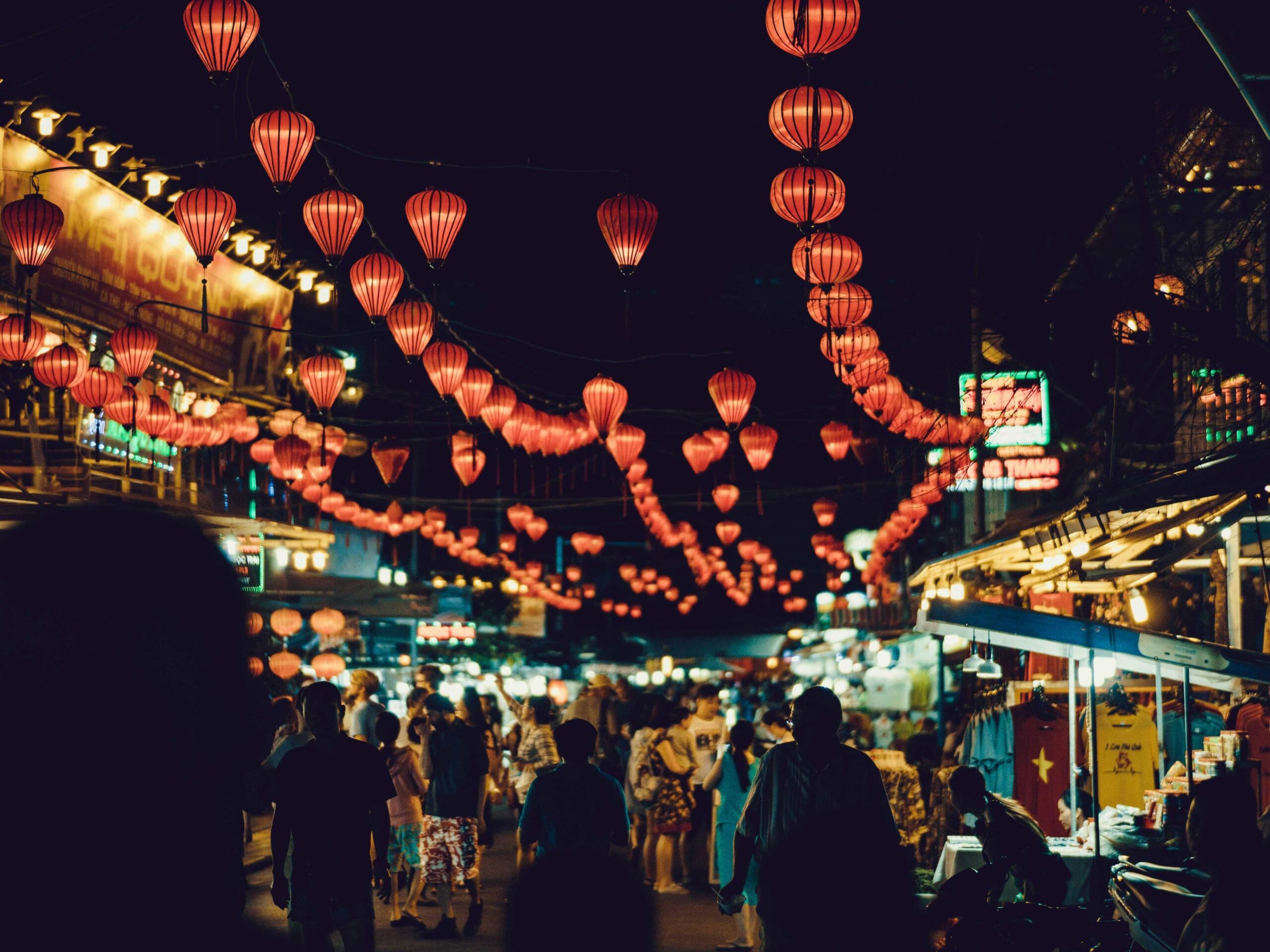
Get the overnight bus (12 hrs) to Hoi An, an ancient colonial town founded by Chinese merchants, famous for lanterns and historical buildings, and don’t forget to get custom suits in Hoi An.
Navigate the scenic Hai Van Pass to Hue, the often-overlooked imperial city. Take time to explore the massive Imperial Citadel, the historic home of the former Nguyen Dynasty, and visit the Royal Tombs. Hue offers a deep dive into history that is worth a stop, even if you can only spare one day here.
Bottle Cap Top Tip: you’ll want to allow a few rest days in Vietnam as its a massive country and has a lot to offer.
Next, head north through the scenery of Ninh Bình, fittingly nicknamed ‘Ha Long Bay on land’ because of the towering limestone karsts.Take a relaxing boat trip through Tam Cốc, navigating through the caves and paddies. Or for the ultimate reward, climb the 500 steps to the Mua Cave viewpoint where the breathtaking panorama makes the effort worth every step.
Another overnight bus or train will transport you to Hanoi on a budget, Vietnam’s buzzing capital. Navigating this city demands you to dodge the thousands of scooters while immersing yourself in the bustle of the Old Quarter. This is the ultimate backpacker hub, famous for its popular ‘Beer Corner‘ and lively street life where cheap bia hơi flows freely (another bottle cap for the collection). Visit the infamous Hà Lò Prison (referred to as the “Hanoi Hilton”) and the Ho Chi Minh Mausoleum for a sobering look at history. Hanoi offers the ideal fusion of North Vietnam’s famous high-energy travel and historical reflection.
Ha Giang Loop is 3–4 days of motorbike heaven and the highlight of any Southeast Asia backpacking route. Carry on to Sapa to trek through rice terraces with local homestays to send off Vietnam in style.
Vietnam: Quick Reference guide
| Food and Drink Tip | Cultural Insights | Budget Advice | Visa Requirement |
| Food and drink is the cheapest you will find in Southeast Asia. Banh Mi costs as little as $0.50 and Pho $1 at street vendors. You shouldn’t pay more than $1 for beer unless in a fancy bar. | Intense & Historic: Fast-paced and dynamic in cities . Distinct feel between north and south. Respect historical sensitivities around war sites. | Vietnamese Đồng (VND). Vietnam is where you can save big, spending less than $20 USD per day with cheaper hostels. | Most European passports get 45 days visa-free. If planning a longer stay, apply for the 90-day eVisa before travelling. Have small dollar bills ready for a ‘stamping fee’. |
Month 3: Laos and Northern Thailand
For this leg of the 6 month Southeast Asia Itinerary, head from North Vietnam into Laos, either enjoy the 25 hour scenic bus journey, or take a short 1 hour flight to save time.
Arrive in Laos’ capital, Vientiane, though I don’t recommend staying long here. One day is plenty to tick off the key temples and experience French colonial architecture. Before you leave, you must visit the sobering COPE Visitor Centre. This is vital for understanding the darker history of Laos, which remains devastated by unexploded ordenance (UXO) from the USA’s secret bombing campaign. It’s an important stop that adds powerful context to your Southeast Asia backpacking route and shows respect to the Laotian people.
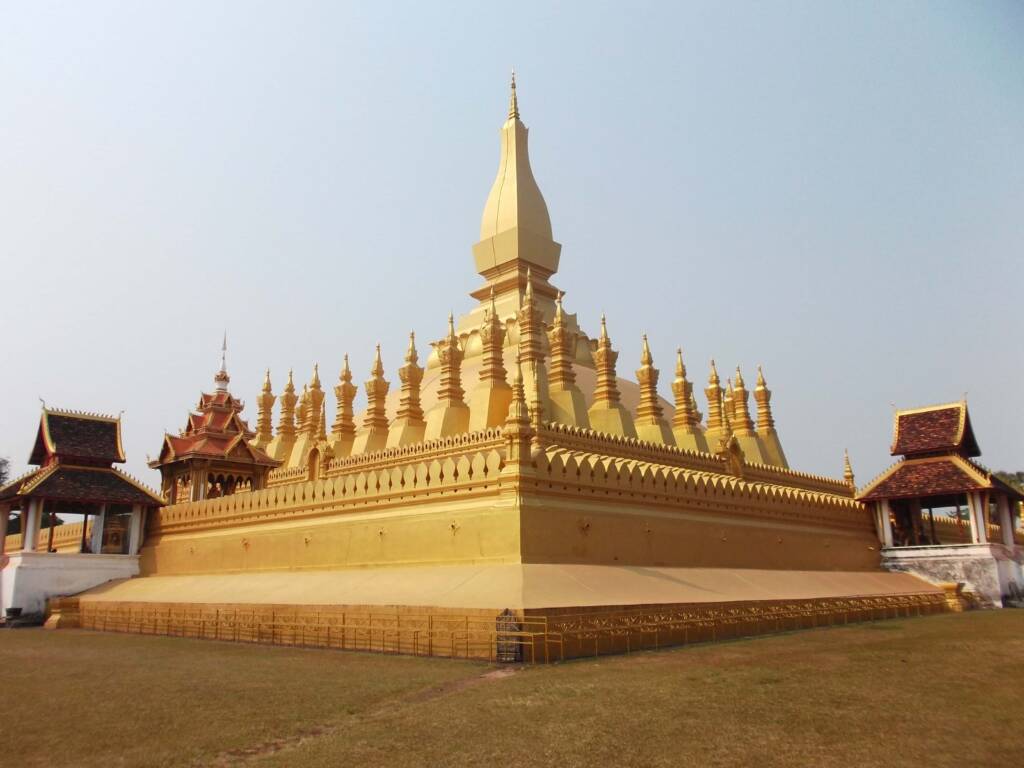
Depending on your chosen Southeast Asia backpacking route you might head down towards Pakse and the 4000 islands on the way to the Cambodian border. Or, like me, head across to Vang Vieng, backpackers paradise for adventures. Sadly tipsy tubing has changed due to government limitations, but the viewpoints of Pha Ngern and Phapounggkham still offer spots for iconic photos.
Following this route will bring your time in Laos to a close in Luang Prabang, a city that blends iconic Buddhist tradition with French colonial vibes. Climb Phousi Hill for the ideal golden sunset view over the Mekong River and surrounding city, and then head straight to the well-known Daily Night Market for souvenirs and street food. Swimming in the turquoise pools of the Kuang Si Waterfalls is a must-do as it’s a genuine highlight of Laos and the ultimate Bottle Cap Moment.
Laos: Quick Reference guide
| Cheap Eats | Cultural Insight | Money Tips | Visa Requirement |
| Laab / Laap (meat salad) Laos Khao Soi Sticky Rice Sai Kok (Lao spicy sausage) Coconut pancakes | Relaxed & Landlocked:Devout Buddhist so dress modestly in temples and alms giving. Don’t touch monks and be respectful when taking photos. | Lao Kip (LAK). Cash is king, and cards are rarely accepted. Keep small notes, as change for large bills can be difficult. | Visa on Arrival (VoA) or eVisa: 30 day VoA for most nationalities. $30–$45 USD depending on nationality and entry point. |
Now leave Laos via slow boat up the Mekong River into Thailand
Northern Thailand, known as the Golden Triangle, has a distinctly unique culture compared to the south, given its proximity to Myanmar and Laos on the Banana Pancake trail
Stop off at the iconic White Temple (Wat Rong Khun) in Chiang Rai for a unique experience unlike any other temple. Chiang Mai is at the heart any Southeast Asia backpacking route, with many attractions to keep you hooked including temples, trekking and unique cuisine.
Pai is a backpacker haven on the Banana Pancake Trail, where backpackers get stuck in the Pai hole, not a literal hole, but the time vortex that exists in this town. Be warned: one day here might turn into one month if you like the vibe.
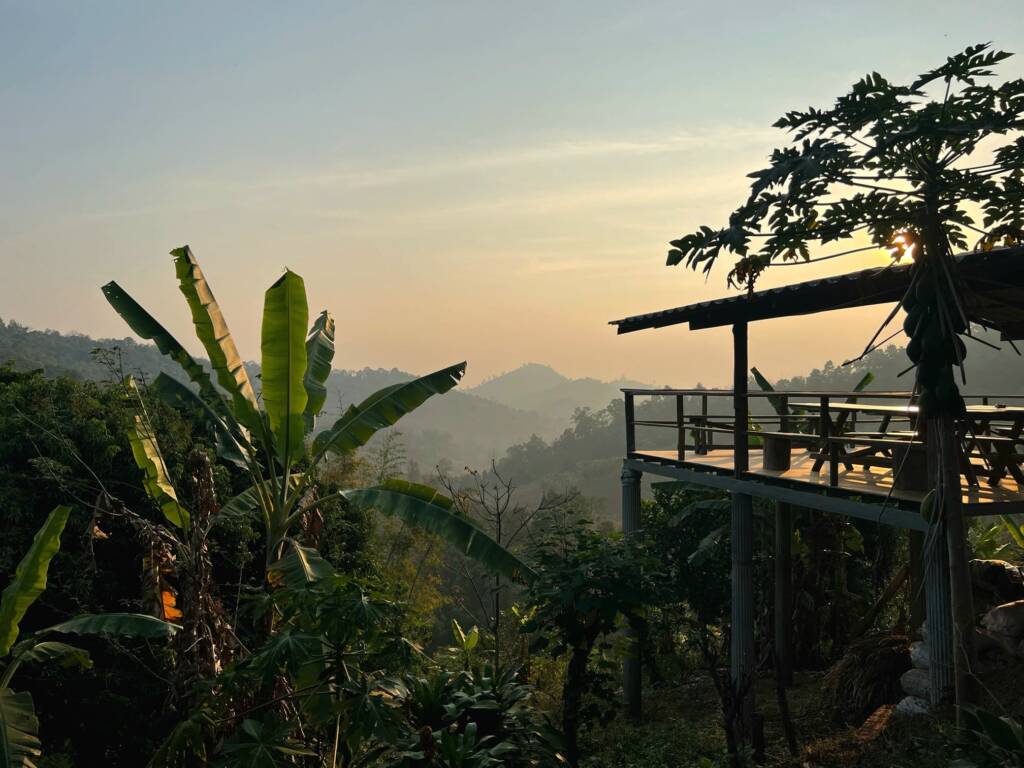
Homestay: The villages around Pai are home to the Karen tribe, a homestay here offers an insight into this unique culture and a trek through the lush jungle of Northern Thailand. Allow 2-3 days for this.
Bottle Cap Tip: Riding a scooter from Chiang Mai to Pai takes you along some breathtaking roads, just make sure you know what you are doing before renting a scooter in Southeast Asia. Alternatively hop on a minivan.
Month 4: Thai island Hopping into Malaysia
Bangkok – Koh Samui – Koh Tao – Koh Phangan – Krabi – Phuket – Koh Phi Phi – Koh Lipe
You should be more than halfway through your 6 month Southeast Asia itinerary at this point. Return to Bangkok on your way to the islands, making sure to buy plenty of sunscreen, bug repellent, toiletries, and other necessities. Prices here are significantly lower than those on the islands.
On the east side you have Koh Samui, the largest island with an airport, Koh Phangnan famous for the full moon party and yoga retreats, and Koh Tao the smallest in size but not character, this place is home to hundreds of dive resorts serving some of the best dive spots in Asia.
If you are wanting to get your diving licence then I suggest allocating a week out of your 6 month Southeast Asia itinerary here to schedule in some fun dives after.
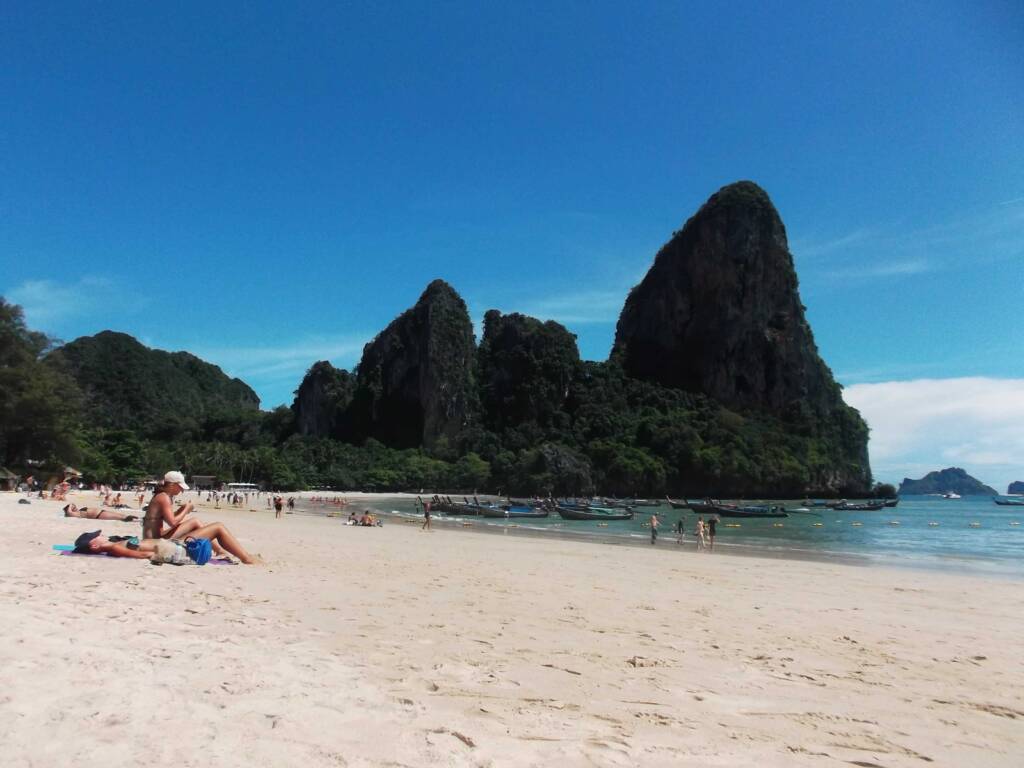
On the west side, from Krabi or Ao Nang you can reach many islands in the Andaman Sea including Phuket, Koh Phi Phi, Koh Lanta and Koh Kradan. These islands are a tropical paradise so pick your favourites and work your way down to Koh Lipe. It is easy to book ferries between the islands and they run frequently in peak season.
Koh Lipe is the last stop before taking the ferry to Langkawi island in Malaysia. The ferry journey is roughly 2.5 hours, and saves going back on yourself to catch a flight.
Thailand: Quick Reference guide
| Cheap Eats | Cultural Insights | Money Tips | Visa Requirement |
| Pad Thai Pad See Ew Pad Ka Prow Papaya Salad Pork Satay Mango Sticky Rice Tom Yum Soup Khao Soi | Easy & Spiritual: Highly developed and very easy to navigate. Be mindful when visiting temples; respect Buddha images by covering knees and shoulders.The wai (hands in a prayer like motion is a sign of great respect) | Thai Baht (THB). Very budget-friendly, although prices on the islands are inflated. Cash is needed for street food and markets. ATMs are plentiful, but charge a high fee so withdraw large amounts in one transaction. | Visa Exempt (30–60 days): Most nationalities receive a 30 to 60-day stamp on arrival. Thailand intoriduced the Digital Arrival Card in May 2025. Check the offical tourism website for the latest updates. |
Month 5: Malaysia and Borneo Itinerary
The tropical island of Langkawi is home to miles of beaches, a geopark forest, mountains, and waterfalls. Three or four days here gives plenty of time to unwind and explore.
Note: as of May 2025, the ferry connection to Penang had stopped running so I had to fly from Langkawi to Penang which cost $17 with checked baggage.
Going down the western side you’ll visit Penang including George Town, home to undeniably the best food in Malaysia if not all of Asia. Kuala Lumpur, Malaysia’s capital is a modern metropolis offering a lot of shops and even more street food. Malacca is another European colonial town with a distinct feel, but the real highlight is the local Nyonya Culture and food – another food lover’s paradise.
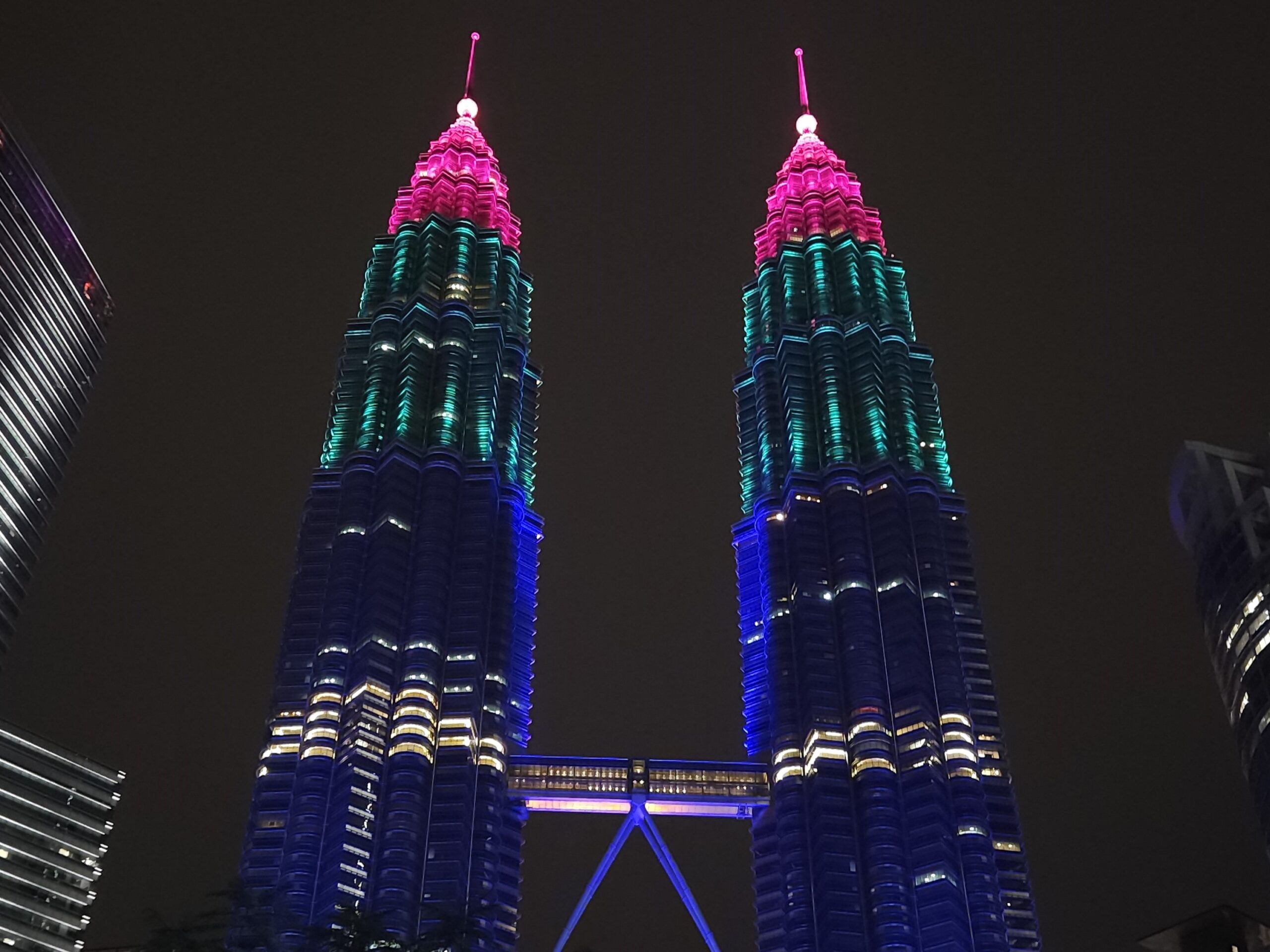
On the east coast of Malaysia you’ll find pristine beaches and some of the best diving sites in the world. The Parhentian islands provide fantastic diving opportunities and Tioman island is another dive spot well worth visiting to see healthy coral. Kuala Tereggannu coastal city is worth a stop on the way to discover its hidden gems, a floating Crystal Mosque (Masjid Kristal), the Teregganu State Museum and an iconic drawbridge.
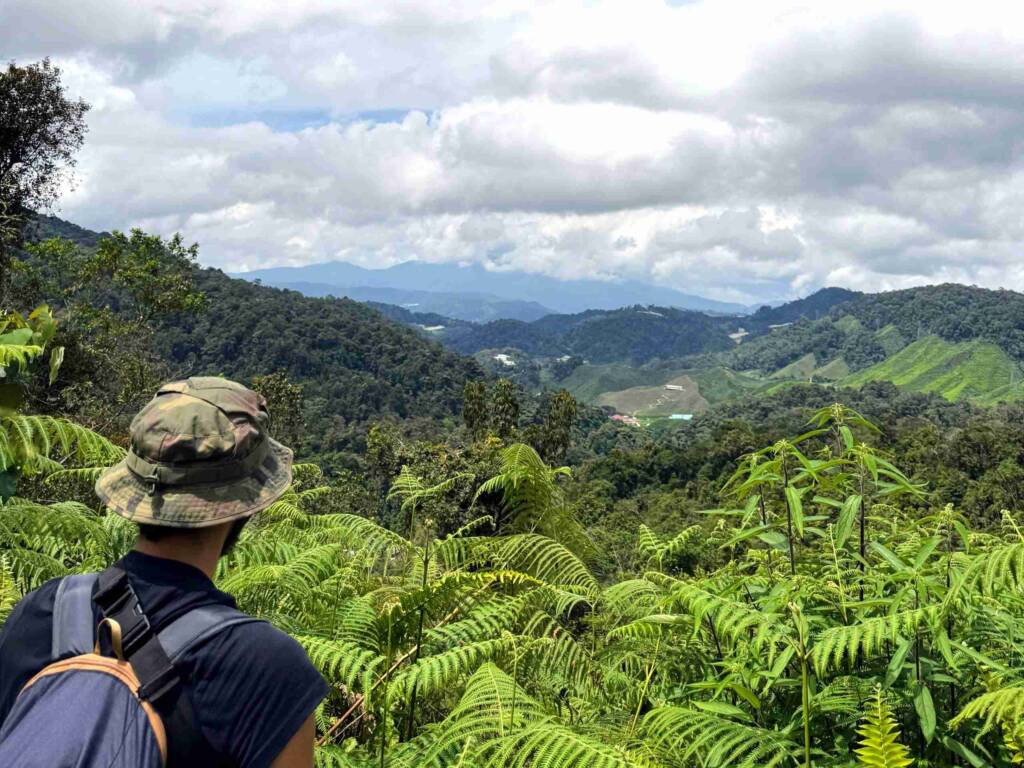
The Cameron Highlands are a walkers paradise, home to misty rainforests and tea plantations providing miles of scenic hiking trails.
Taman Negara is the oldest rainforest in the world at 3.5 million years old. I spend a night here sleeping in a cave and would highly recommend the experience of venturing deep into this untouched wilderness.
Borneo (Sarawak and Sabah):
Malaysian Borneo can be explored in less than two weeks, so this could fit easily into a 6 month Southeast Asia itinerary. Head to Kuching, the capital of Sarawak in Malaysian Borneo, to launch your adventure into nature. This city is charming and chill, with an amazing riverside promenade. Nearby is Baku National Park, Mount Santubong, and Kubah National Park, all offering amazing jungle hikes with chance to see proboscis monkeys.
Kota Kinabalu, is a backpacker hub for people venturing on adventures through Sabah.
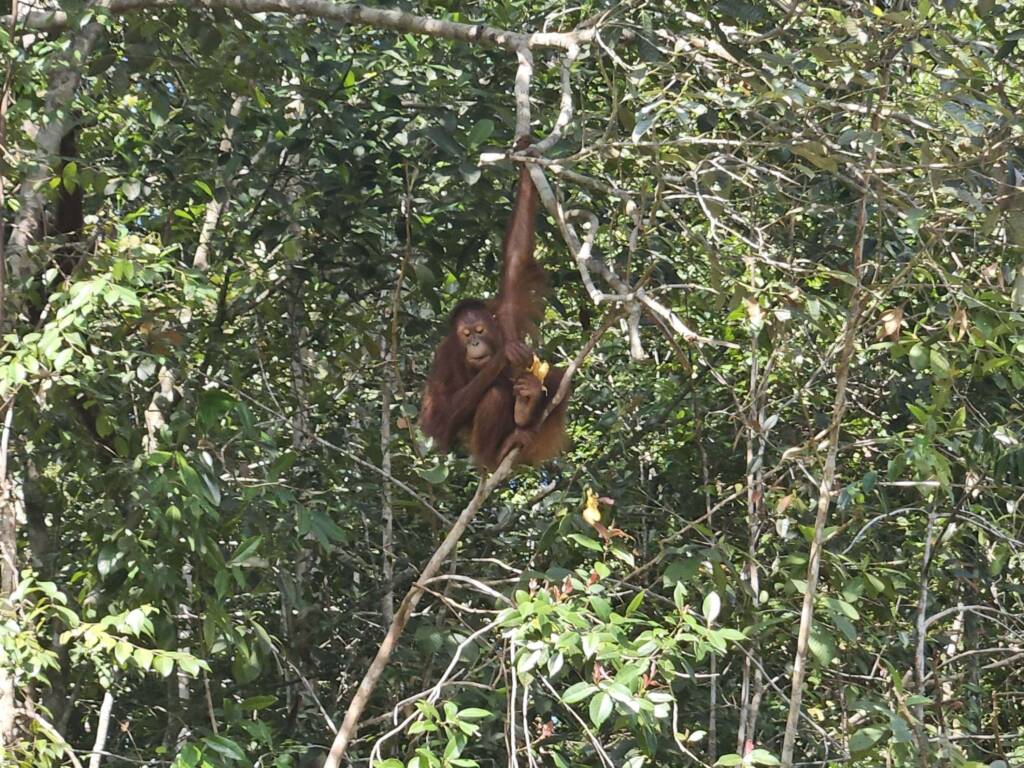
Stop deep in the heart of Borneo’s rainforest at Sepilok. Here you can see Oranguatans at the sanctuary, or the Sunbear Conservation Centre inhabited by bears that have been saved from a gruelling captivity. Sepilok is the springboard to Kinabatangan, a river cruise here through the most ecodiverse region on earth provides outstanding odds to see the big 5.
Malaysia: Quick Reference guide
| Food and Drink Tip | Cultural Insight | Money Tips | Visa Requirement |
| Street food is way cheaper here than resturaunts. Mamak stalls sell budget friendly Mamak Noodles for $1 USD. | Multi-Cultural Hub: Colonial history with rich Malay, Chinese, and Indian influences. Modern infrastructure mixes with dense jungle. | Malaysian Ringgit (MYR). Mid-range budget $35-45 per day. Card widely accepted in cities. Cash only for many of the islands. | Visa Exempt: 90-day visa-free stamp on arrival for for most Western visitors. Submit the Malaysia Digital Arrival Card (MDAC) online before arrival. |
This is where you will need to plan the remainder of your 6 month Southeast Asia itinerary, deciding when to visit Singapore, and book transport accordingly.
It is easy to take a short trip to Singapore via Malaysia. The bus from Kuala Lumpur takes 4 hours, or from 2025 , you can take the SBS Singapore Transport bus 170 from Johor Bharu, Malaysia. However, Singapore is very accessible as a major transport hub, so you could fit this into any part of your southeast asia backpacking route.
Singapore: 3-day itinerary
Singapore is an ultra-modern city-state separated from peninsular Malaysia by a seven-mile causeway. Singapore is well worth a visit and deserves three days to fully explore everything it has to offer. It is best left to the end of your 6 month Southeast Asia itinerary as it is the best transport hub for flights out of Southeast Asia, and a final culture shock before heading home. Also, Singapore’s prices will burn through whatever is left of your Southeast Asia budget.
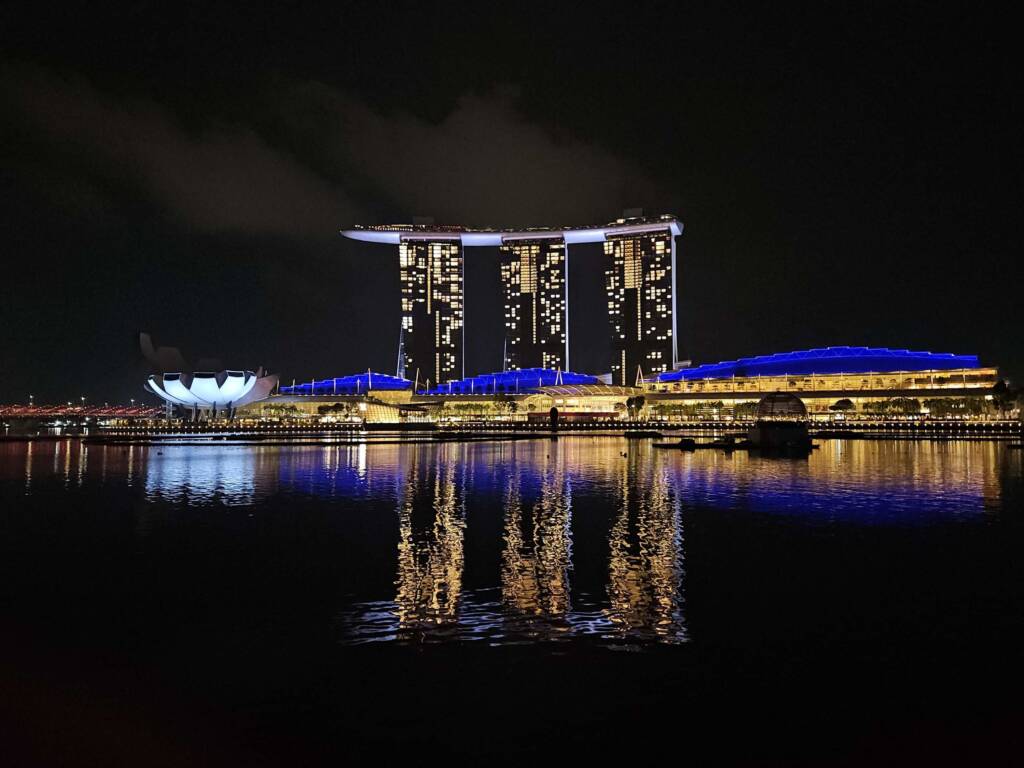
The main attractions that Singapore is famous for are Gardens By The Bay, which includes a free light show every evening and Marina Bay Sands Hotel, the iconic surfboard design dominates the cityscape. But there are many free attractions for the budget backpacker including exploring the streets and temples of China Town and Little India will occupy your time, and these are great places to grab cheap food.
Fort Canning offers an insight into Singapore’s British colonial history including their surrender during the Second World War. The Singapore Botanical gardens are a green jewel in the heart of the metropolis. Singapore has more to offer than you might realise, and if you are ending your 6 month Southeast Asia itinerary here, then it’s an inspiring city that will leave a lasting impact.
Singapore: Quick Reference guide
| Food and Drink Tip | Cultural Insight | Budget Advice | Visa Requirements |
| Eat at Hawker stalls to find main meals for around $5 USD. Hainanese Chicken Rice or Bee Hoon noodles are tasty budget options. | Modern & Efficient: Highly developed, strict rules with fines (chewing gum, littering). The highest cost of travel in the region, but extremely easy to navigate. | Singapore Dollar (SGD). Highest budget required ~ $70 USD per day. Cards widely accepted everywhere, even preferred. | Visa Exempt (30–90 days): Visitors must submit the SG Arrival Card (SGAC) and Health Declaration online within 3 days prior to arrival.Proof of onward travel is required. |
Month 6: Indonesia 1-month itinerary
If you fly into Jakarta, Java is your natural starting point. Skip the capital and head straight for the action. Java provides an in-depth exploration of geology and history. Climb Mount Bromo at sunrise for a truly spectacular lunar-landscape photo opportunity, and then turn your attention to culture by exploring the ancient temples of Yogyakarta.
After 6 months backpacking Souteast Asia, you might need a break so head straight to iconic Bali to rest, recharge, or relax. Bali is huge and caters to every budget, which is why it remains so popular.
For a calmer alternative, jump across to Lombok and The Gili Islands. Lombok is dominated by the colossal Mount Rinjani, an epic challenge if you have enough energy for one last hike. The Gilis offer a relaxed atmosphere, focusing purely on snorkeling, diving, and beach chilling, fantastic for ending your trip in tropical paradise. If you still have enough of your Southeast Asia budget left, it’s worth heading further east.
Flores and Komodo National Park are the definition of a Bottle Cap Moment. Providing dramatic, sweeping landscapes, the surreal Pink Beach on Komodo, and the thrill of tracking Komodo Dragons. It’s pricier and requires more planning, but it guarantees you finish your 6 month Southeast Asia itinerary with unforgettable stories.
Indonesia: Quick reference Guide
| Cheap Eats | Cultural Insight | Money Tips | Visa Requirements |
| Nasi Goreng (fried rice) Mee Goreng (fried noodles) Ikan Bakaar (grilled fish) Soto (traditional soup) Pisang Goreng (fried banana) Bakso (meatball soup) | Island Diversity: Largest archipelago with extreme cultural and geographical diversity (Bali’s Hindu, Java’s Islamic). Respect local customs outside of tourist areas. | Indonesian Rupiah (IDR). Budget is excellent value, though Bali can be more expensive. Credit cards accepted at major hotels/restaurants. | Visa on Arrival (VoA): Purchase at the airport ($35 USD for 30 days). Extendable once for a total of 60 days. eVisa can be obtained online before arrival for a 60-day stay. Proof of onward travel required. |
Bonus: Hidden Gems and off the path alternatives
Now the main 6 month Southeast Asia Itinerary sorted, it’s time to look at hidden gems . However, this section is for those of you who want to avoid the crowds and locate those unique, less visited locations. These locations serve as the setting for true Bottle cap Moments.
Phong Nha, Vietnam: The Adventure Capital of Asia
Why you should visit Phong Nha Ke-Bang National Park:
This area is famous for housing the world’s largest cave Son Doong. Whilst entry to Son Doong is limited, there are hundreds of other massive caves and caverns open to explore deep in untouched nature. It offers an entirely different, high-adrenaline experience with a strong backpacking culture.
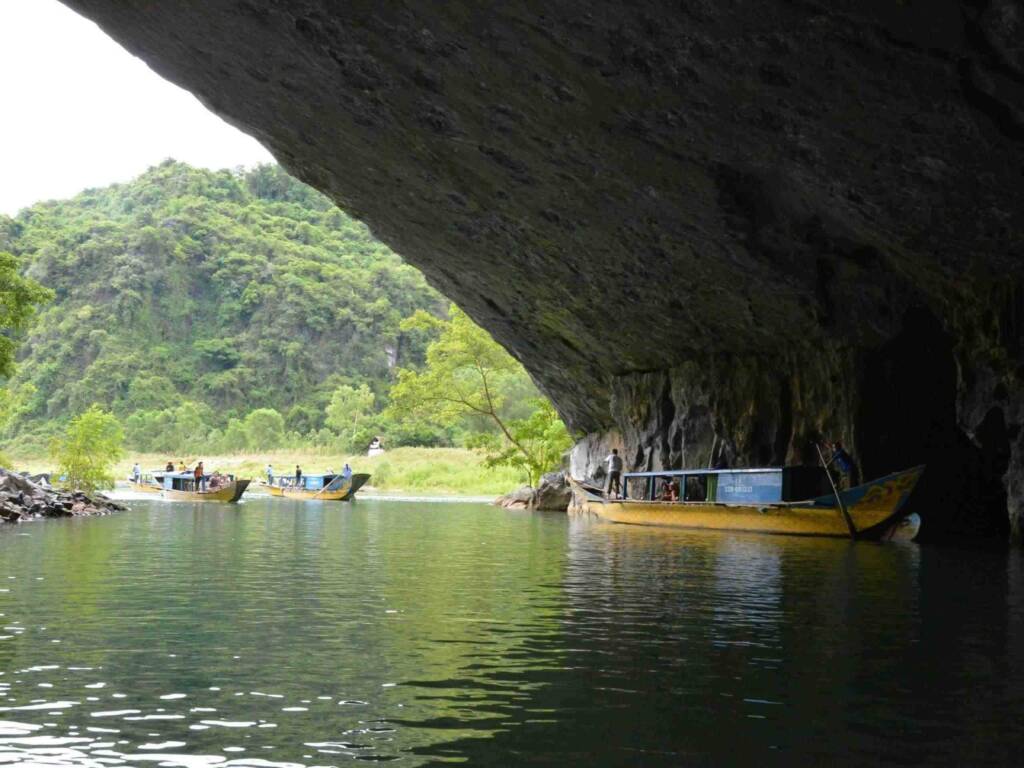
The Bottle Cap Moment: Explore Paradise Cave and the Dark Cave. There are options to book an overnight trek into the jungle for a multi-day cave expedition.
Koh Lanta, Thailand: The Ultimate Beach Island
Why You Should visit Koh Lanta:
If Phuket and Koh Phi Phi feel too hectic, Koh Lanta is the quieter alternative. It’s a vast, beautiful island with a far more relaxed atmosphere. Koh Lanta offers pristine white beaches and spectacular sunsets.
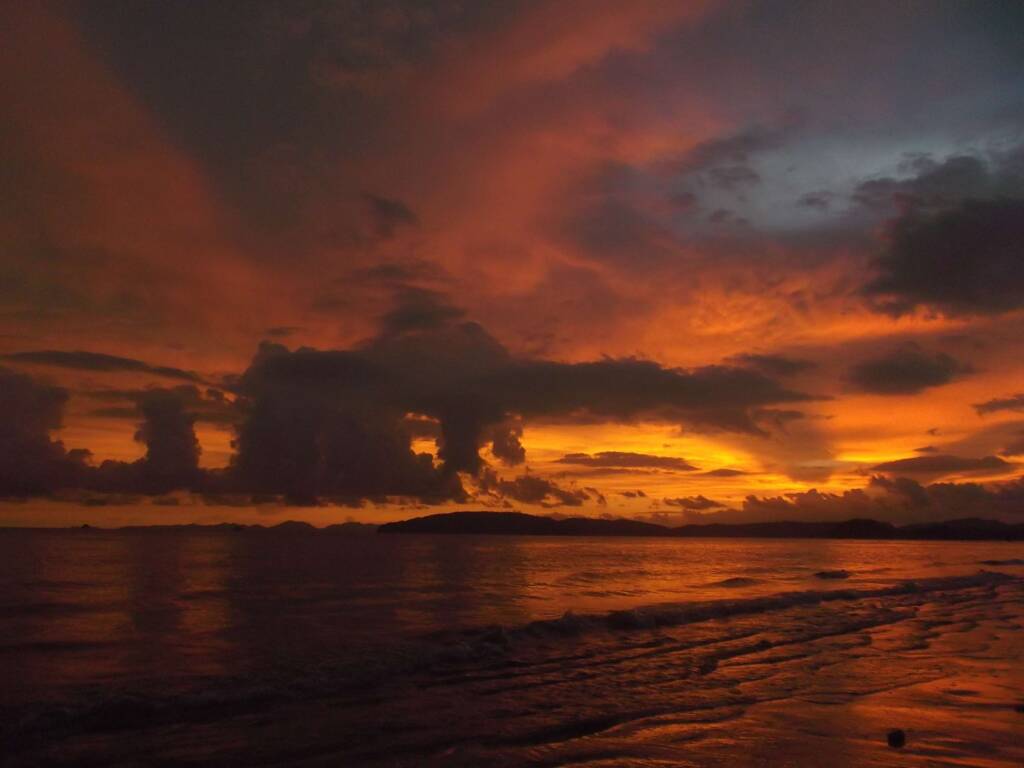
Bottle Cap Moment: Rent a scooter to explore the various hidden beaches, and find one on the west side for the most incredible sunset views you’ll ever see!
Redang Island, Malaysia: The Snorkel Paradise
Why You Should Visit Redang Island:
Avoid the over-snorkelled beaches and head for Redang, which is part of a protected marine park, so the coral and marine life are absolutely pristine! The water is an unbelievable turquoise, making the beaches look straight out of a postcard. It’s pricier than other spots, but makes for a great retreat for a few days relaxation.
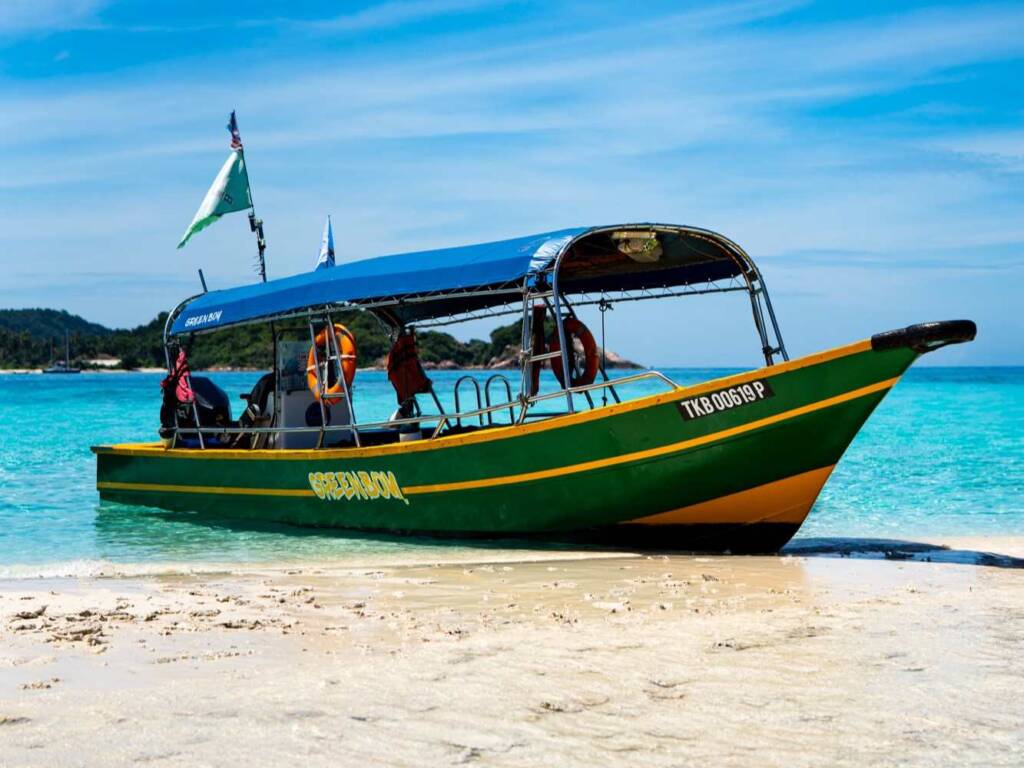
Bottle Cap Moment: Visit Long Beach, the main beach on the island. Take a snorkelling trip to the surrounding islets to see turtles and schools of tropical fish.
Nong Khiaw, Laos: The Dramatic Mountain Escape
Why You SHould Visit Nong Khiaw:
This delivers the true Laos feeling of slow, remote travel surrounded by nature. Nong Khiaw is a small village on the Nam Ou River nestled dramatically between colossal limestone karsts. Perfect for hiking and kayaking, with a more relaxed atmosphere than Vang Vieng.
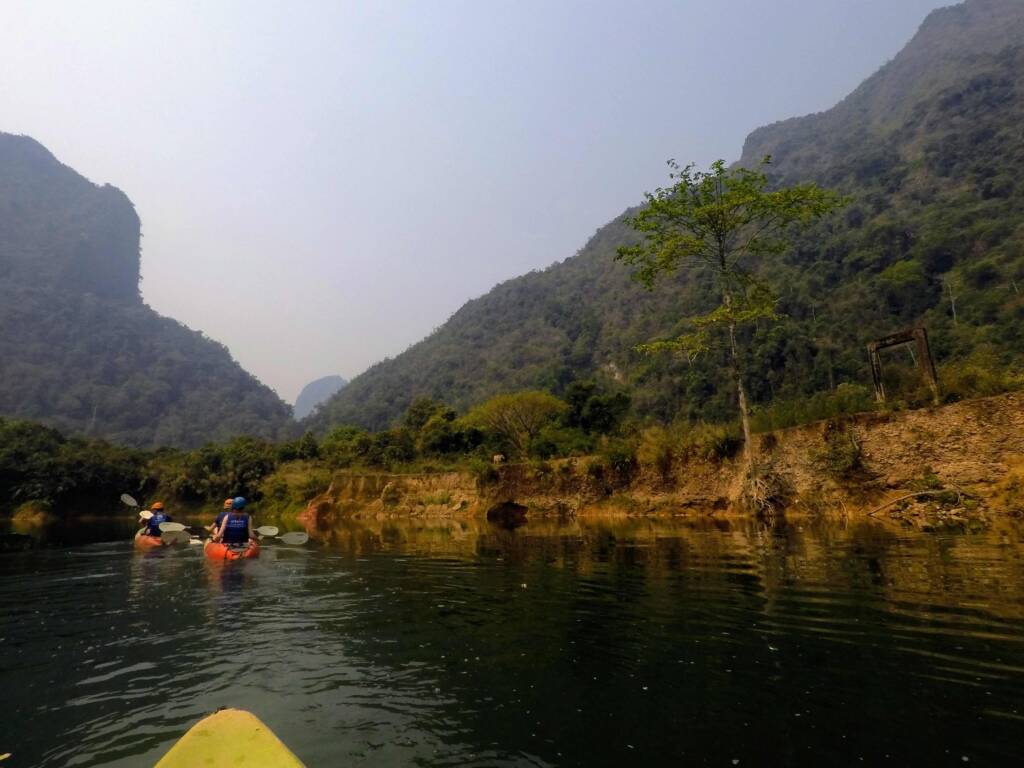
Bottle Cap Moment: Climb up to the viewpoint trail, a short but sharp hike, for a jaw-dropping sunrise view above the morning mist.
Gili Air, Indonesia: The best Gili Island
Why You Should Visit Gili Air
The party scene in Gili Trawangan (Gili T) is what most backpackers are familiar with. For pure bliss, however, visit Gili Air or Gili Meno. Gili Meno is undoubtedly the most tranquil island but more suited for couples or complete relaxation, whereas Gili Air strikes the perfect balance between peace and a chill social scene. Only bicycles and horse-drawn carts are permitted so no cars nor motorcycles on the island. This creates the perfect calm and pollution-free environment.
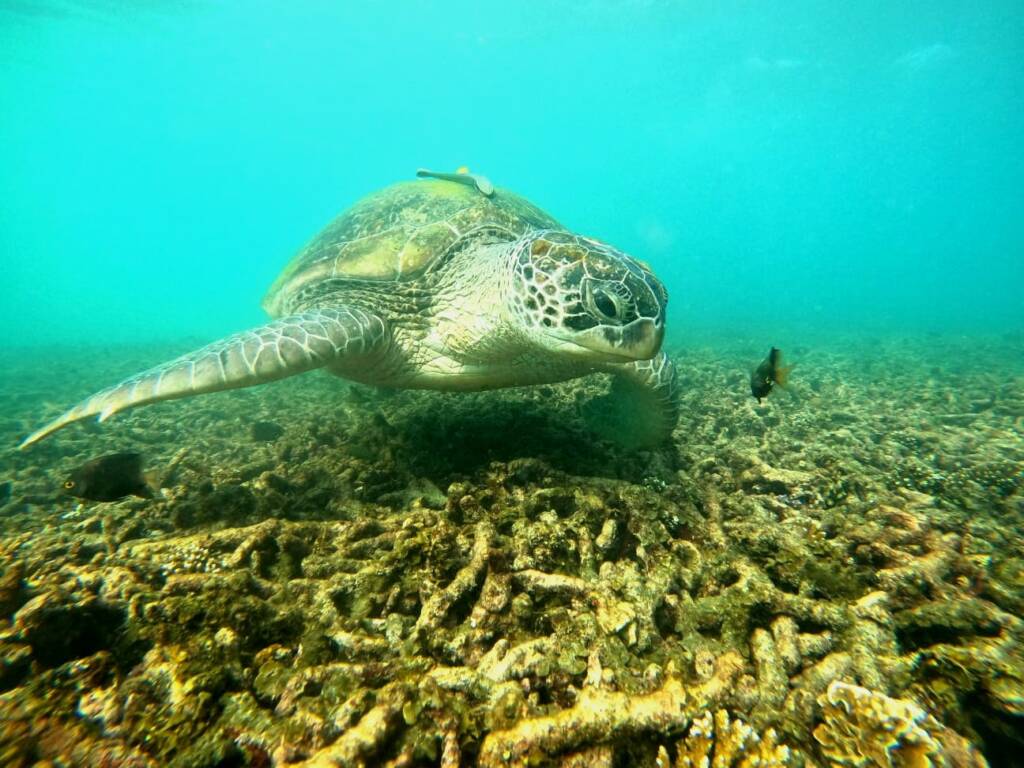
Bottle Cap Moment: Rent a bike and cycle the entire perimeter of Gili Air in an hour! Take a snorkel to swim just off the Northern beaches to spot massive sea turtles.
Conclusion: Stop Planning, Start Living
You’ve studied the map, planned the budget, and got the list of hidden gems. Now you know the locations of the pristine reefs of Redang, the dive sites on Koh Tao, and the serene rivers of Nong Khiaw. This itinerary is your inspiration to break the routine, not just a guide.
This is the only investment that will result in a completely different version of you after six months. Learning to solve problems, forming connections with strangers, and gaining the ability to communicate without a common language. The logistics are finished. Your ultimate 6 month Southeast Asia backpacking itinerary is sorted.
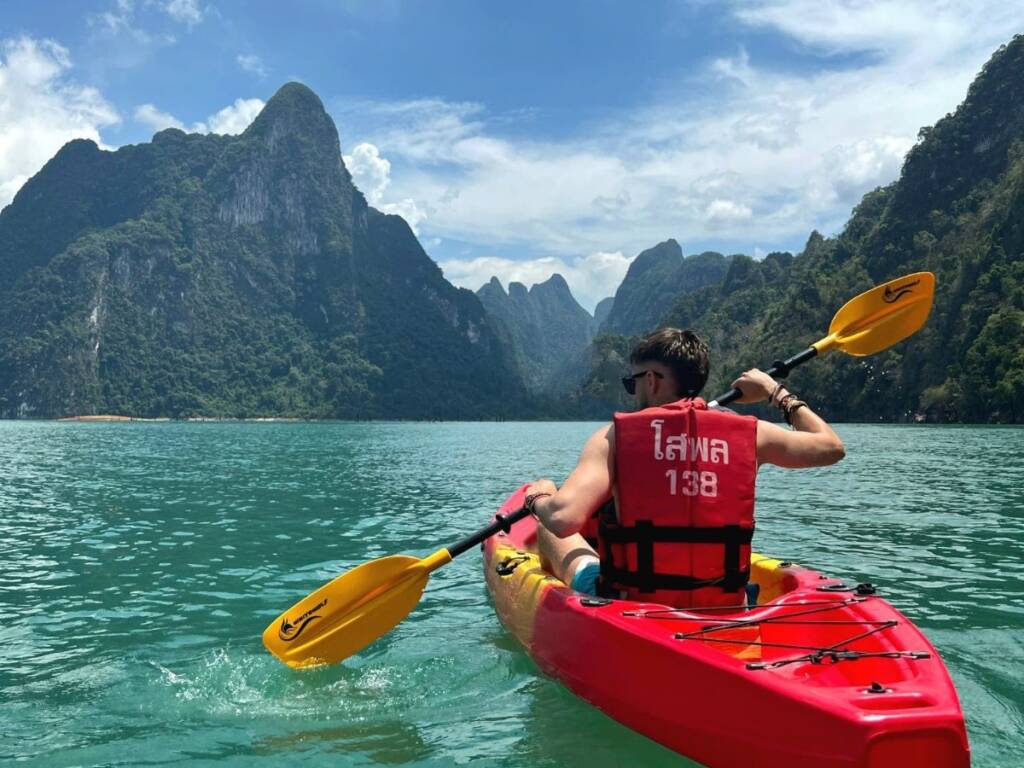
Close the tabs, book that one-way ticket, and jump in. That feeling of nervous excitement? That’s adventure calling, not fear. Turn your itinerary into a reality.
[{"id":555,"link":"https:\/\/bottlecapbackpacker.com\/backpacking-in-chiang-mai\/","name":"backpacking-in-chiang-mai","thumbnail":{"url":"https:\/\/bottlecapbackpacker.com\/wp-content\/uploads\/2026\/01\/1000080102.jpg","alt":""},"title":"Backpacking in Chiang Mai: Where the Temples are Higher and the Prices Lower","postMeta":[],"author":{"name":"Bottle Cap Backpacker","link":"https:\/\/bottlecapbackpacker.com\/author\/bottlecapbackpackergmail-com\/"},"date":"Jan 27, 2026","dateGMT":"2026-01-27 12:04:56","modifiedDate":"2026-01-27 14:17:54","modifiedDateGMT":"2026-01-27 13:17:54","commentCount":"1","commentStatus":"open","categories":{"coma":"<a href=\"https:\/\/bottlecapbackpacker.com\/category\/bottle-cap-moments\/\" rel=\"category tag\">Bottle Cap Moments<\/a>","space":"<a href=\"https:\/\/bottlecapbackpacker.com\/category\/bottle-cap-moments\/\" rel=\"category tag\">Bottle Cap Moments<\/a>"},"taxonomies":{"post_tag":""},"readTime":{"min":13,"sec":29},"status":"publish","content":"The most iconic temple in Chiang Mai, Wat Chedi Luang. Backpacking in Chiang Mai has a way of ruining your onward travel plans. You arrive"},{"id":523,"link":"https:\/\/bottlecapbackpacker.com\/3-days-in-bangkok-itinerary\/","name":"3-days-in-bangkok-itinerary","thumbnail":{"url":"https:\/\/bottlecapbackpacker.com\/wp-content\/uploads\/2025\/12\/20250405_201505-7d642.jpg","alt":""},"title":"3 Days in Bangkok Itinerary: Exploring the City as a First-Time Visitor","postMeta":[],"author":{"name":"Bottle Cap Backpacker","link":"https:\/\/bottlecapbackpacker.com\/author\/bottlecapbackpackergmail-com\/"},"date":"Dec 31, 2025","dateGMT":"2025-12-31 13:32:17","modifiedDate":"2026-01-27 13:19:47","modifiedDateGMT":"2026-01-27 12:19:47","commentCount":"2","commentStatus":"open","categories":{"coma":"<a href=\"https:\/\/bottlecapbackpacker.com\/category\/bottle-cap-moments\/\" rel=\"category tag\">Bottle Cap Moments<\/a>","space":"<a href=\"https:\/\/bottlecapbackpacker.com\/category\/bottle-cap-moments\/\" rel=\"category tag\">Bottle Cap Moments<\/a>"},"taxonomies":{"post_tag":""},"readTime":{"min":14,"sec":1},"status":"publish","content":"Bangkok hits hard on day one. The heat, the traffic and the noise can feel overwhelming, especially if this is your first stop in Southeast"},{"id":487,"link":"https:\/\/bottlecapbackpacker.com\/doha-layover-guide\/","name":"doha-layover-guide","thumbnail":{"url":"https:\/\/bottlecapbackpacker.com\/wp-content\/uploads\/2025\/12\/1000072139-2.jpg","alt":""},"title":"A Layover in Doha, Qatar: How to Turn a Stopover into a Mini Adventure","postMeta":[],"author":{"name":"Bottle Cap Backpacker","link":"https:\/\/bottlecapbackpacker.com\/author\/bottlecapbackpackergmail-com\/"},"date":"Dec 22, 2025","dateGMT":"2025-12-22 16:12:14","modifiedDate":"2026-01-27 13:20:17","modifiedDateGMT":"2026-01-27 12:20:17","commentCount":"0","commentStatus":"open","categories":{"coma":"<a href=\"https:\/\/bottlecapbackpacker.com\/category\/destinations-itineraries\/\" rel=\"category tag\">Destinations & Itineraries<\/a>","space":"<a href=\"https:\/\/bottlecapbackpacker.com\/category\/destinations-itineraries\/\" rel=\"category tag\">Destinations & Itineraries<\/a>"},"taxonomies":{"post_tag":""},"readTime":{"min":7,"sec":56},"status":"publish","content":"Traditional Dhow boats sit in stark contrast to the modern skyline. When I saw Qatar Airways offering a stopover in Doha that included a hotel"},{"id":463,"link":"https:\/\/bottlecapbackpacker.com\/responsible-travel-cambodia-killing-fields\/","name":"responsible-travel-cambodia-killing-fields","thumbnail":{"url":"https:\/\/bottlecapbackpacker.com\/wp-content\/uploads\/2025\/11\/choeung-ek-killing-field-memorial-statue.jpg","alt":""},"title":"Responsible Travel in Cambodia: Confronting Dark History at S21 and the Killing Fields of Phnom Penh","postMeta":[],"author":{"name":"Bottle Cap Backpacker","link":"https:\/\/bottlecapbackpacker.com\/author\/bottlecapbackpackergmail-com\/"},"date":"Nov 21, 2025","dateGMT":"2025-11-21 17:51:35","modifiedDate":"2026-01-27 14:13:47","modifiedDateGMT":"2026-01-27 13:13:47","commentCount":"4","commentStatus":"open","categories":{"coma":"<a href=\"https:\/\/bottlecapbackpacker.com\/category\/bottle-cap-moments\/\" rel=\"category tag\">Bottle Cap Moments<\/a>","space":"<a href=\"https:\/\/bottlecapbackpacker.com\/category\/bottle-cap-moments\/\" rel=\"category tag\">Bottle Cap Moments<\/a>"},"taxonomies":{"post_tag":""},"readTime":{"min":12,"sec":27},"status":"publish","content":"Understanding Cambodia\u2019s tragic history is not dark tourism. It is part of responsible travel Cambodia, travelling with respect, compassion, and acknowledging the weight of the"},{"id":422,"link":"https:\/\/bottlecapbackpacker.com\/singapore-on-a-budget-guide\/","name":"singapore-on-a-budget-guide","thumbnail":{"url":false,"alt":false},"title":"Singapore on a Budget: The Complete 3-Day Itinerary","postMeta":[],"author":{"name":"Bottle Cap Backpacker","link":"https:\/\/bottlecapbackpacker.com\/author\/bottlecapbackpackergmail-com\/"},"date":"Nov 13, 2025","dateGMT":"2025-11-13 18:14:48","modifiedDate":"2025-11-19 14:22:24","modifiedDateGMT":"2025-11-19 13:22:24","commentCount":"4","commentStatus":"open","categories":{"coma":"<a href=\"https:\/\/bottlecapbackpacker.com\/category\/destinations-itineraries\/\" rel=\"category tag\">Destinations & Itineraries<\/a>","space":"<a href=\"https:\/\/bottlecapbackpacker.com\/category\/destinations-itineraries\/\" rel=\"category tag\">Destinations & Itineraries<\/a>"},"taxonomies":{"post_tag":""},"readTime":{"min":16,"sec":32},"status":"publish","content":"The Merlion is the national icon of Singapore representing 'Lion City'. Is visiting Singapore on a budget actually possible? Before visiting Singapore, the city-state's reputation"},{"id":280,"link":"https:\/\/bottlecapbackpacker.com\/6-month-southeast-asia-backpacking-itinerary\/","name":"6-month-southeast-asia-backpacking-itinerary","thumbnail":{"url":"https:\/\/bottlecapbackpacker.com\/wp-content\/uploads\/2025\/11\/ultimate-6-month-backpacking-itinerary-laos-scaled.jpg","alt":"Backpacker celebrating on a motorbike with the Laos flag, overlooking the valley. Ultimate 6-month Southeast Asia itinerary."},"title":"The Ultimate 6 Month Southeast Asia Backpacking Itinerary (2025 Guide)","postMeta":[],"author":{"name":"Bottle Cap Backpacker","link":"https:\/\/bottlecapbackpacker.com\/author\/bottlecapbackpackergmail-com\/"},"date":"Nov 4, 2025","dateGMT":"2025-11-04 18:42:12","modifiedDate":"2025-11-06 13:47:58","modifiedDateGMT":"2025-11-06 12:47:58","commentCount":"0","commentStatus":"open","categories":{"coma":"<a href=\"https:\/\/bottlecapbackpacker.com\/category\/destinations-itineraries\/\" rel=\"category tag\">Destinations & Itineraries<\/a>","space":"<a href=\"https:\/\/bottlecapbackpacker.com\/category\/destinations-itineraries\/\" rel=\"category tag\">Destinations & Itineraries<\/a>"},"taxonomies":{"post_tag":""},"readTime":{"min":33,"sec":18},"status":"publish","content":"This is the reward after completing a tough leg of your ultimate 6-month Southeast Asia backpacking itinerary. The hard work is always worth the view!"}]